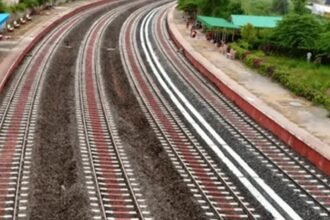


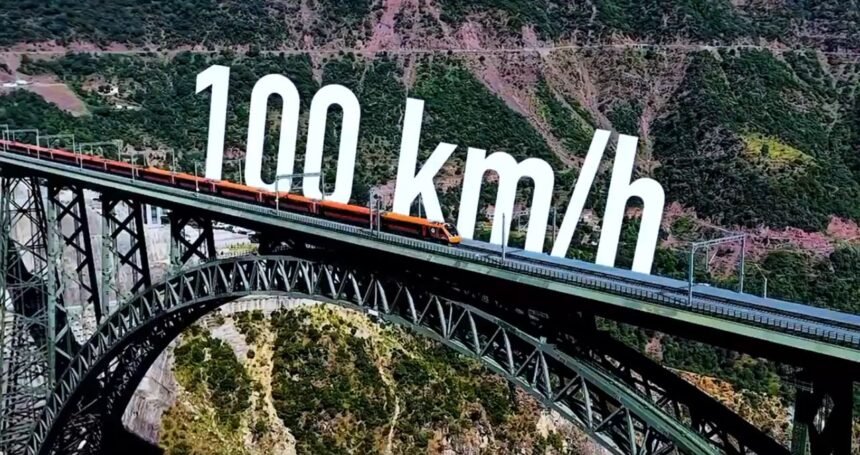
Indian Railways achieved a major infrastructure milestone on October 2, 2026, by raising operational limits in Jammu and Kashmir. Officials successfully increased the maximum permissible speed on the 111-kilometre Shri Mata Vaishno Devi Katra–Banihal section from 75 km/h to 100 km/h. Consequently, the Vande Bharat Express established a new operational benchmark during high-speed technical trials.
Vande Bharat sets landmark record across engineering marvels
During the trials, Train No. 26401/26404 crossed two critical engineering landmarks at top velocity. Specifically, the train zoomed across the world’s highest rail structure, the Chenab Bridge, at 100 km/h. Additionally, the rake sped across the Anji Khad Bridge, which stands as India’s first cable-stayed railway bridge.
| Key Operational Parameter | Previous Operational Details | Updated Operational Status |
| Section Route | Katra to Banihal (USBRL) | Katra to Banihal (USBRL) |
| Section Distance | 111 Kilometres | 111 Kilometres |
| Maximum Permissible Speed | 75 km/h | 100 km/h |
| Test Train Rake | Vande Bharat Express | Train No. 26401/26404 |
| Key Engineering Landmarks | Chenab & Anji Khad Bridges | Chenab & Anji Khad Bridges |
Railway Minister Ashwini Vaishnaw hailed the trial as a transformative development for northern connectivity. Furthermore, senior officials from the Northern Railway’s Jammu Division confirmed that higher speeds will enhance operational efficiency across the Udhampur-Srinagar-Baramulla Rail Link (USBRL) project.
Faster connectivity transforms northern railway network
Therefore, this operational upgrade will significantly reduce total travel duration between the Kashmir Valley and the rest of the country. Furthermore, smooth track conditions ensure safer, faster, and more comfortable journeys for daily passengers. Thus, the increased Katra-Banihal Vande Bharat speed strengthens regional economic integration while accelerating rail transit across challenging Himalayan terrain.