

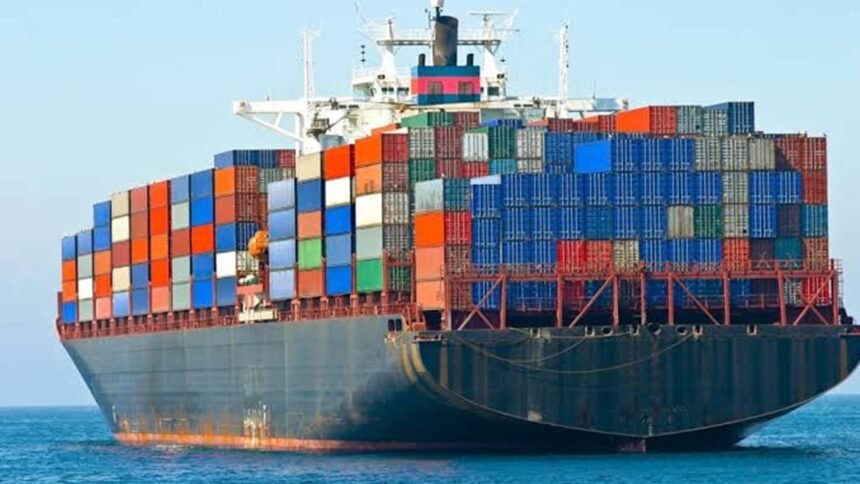
Union Cabinet chaired by Prime Minister Narendra Modi has approved Container Manufacturing Promotion Scheme to boost domestic production and strengthen India’s logistics ecosystem, announced Union Minister Ashwini Vaishnaw during a media briefing on October 28, 2026. Notably, world’s 95% container manufacturing takes place in China. India’s rise as container manufacturer will be a direct competition to China. The Union Cabinet chaired by Prime Minister Modi cleared the flagship program with a total financial outlay of ₹10,000 crore spanning 13 years up to FY 2039-40. Furthermore, the scheme aims to reduce India’s reliance on foreign shipping container imports and establish a globally competitive manufacturing footprint.
Core financial assistance components and ISA allocation
The promotion framework rests upon four key pillars: Interest Subvention Assistance (ISA), Testing & Certification assistance, Land Leasing support, and Operational Expenditure Assistance. Consequently, these target financial interventions will assist domestic manufacturers across both capital build-up and operational phases.
Additionally, the government allocated ₹859 crore under the Interest Subvention Assistance (ISA) component to offer a 3% per annum interest subvention on term capital loans. Meanwhile, the policy commits ₹150 crore (approximately 1.5% of total outlay) to support common facilities for dynamic longitudinal impact testing and product certification.
| Scheme Parameter | Cabinet Approved Policy Directives |
| Total Financial Outlay | ₹10,000 crore over 13 years (up to FY 2039-40) |
| Primary Financial Components | ISA, Testing & Certification, Land Leasing, OpEx Assistance |
| Interest Subvention Allocation (ISA) | ₹859 crore for 3% p.a. subvention on term loans |
| Testing & Certification Budget | ₹150 crore (~1.5% of total outlay) |
| Greenfield Capacity Threshold | Minimum 1,00,000 TEUs within 3 years |
| Brownfield Expansion Threshold | Minimum 25,000 TEUs within 3 years |
The scheme has the following major components:
- Interest Subvention Assistance (ISA) with a financial outlay of Rs.859 crore to provide Interest subvention of 3% per annum on eligible term loans (capital loans) availed by container manufacturers for setting up of greenfield container manufacturing facilities and Brownfield expansion of existing container manufacturing capacities
- Operational Expenditure Assistance (OEA) with a financial outlay of Rs.8,891 crore to provide financial assistance for all containers manufactured as per global shipping standards and sold by eligible container manufacturers. This would help bridge the cost gap and improve the competitiveness of domestically manufactured containers.
- Testing and certification assistance with a financial outlay of Rs.150 crore to support setting up of common facilities such as Dynamic longitudinal impact testing etc.
Greenfield and brownfield manufacturing capacity thresholds
To ensure rapid industrial scaling, the government set strict commissioning deadlines for eligible manufacturing facilities. Specifically, greenfield projects must establish an annual capacity threshold of at least 1,00,000 TEUs (Twenty-foot Equivalent Units).
Conversely, brownfield expansion projects must add a minimum annual capacity of 25,000 TEUs. Furthermore, both greenfield and brownfield units must achieve operational commissioning within three years of receiving in-principle approval while meeting global container manufacturing standards. The key goals are:
- Increase annual domestic container manufacturing capacity by around ten-fold, up to 7.5 lakh TEUs.
- Creates an internationally competitive manufacturing base, with potential to position India as a global export hub for quality shipping containers.
- Strengthens resilience of India’s maritime and logistics supply chains.
- Generate an estimated 3,000 direct jobs and over 50,000 indirect jobs, while supporting ancillary industries such as corner castings, specialised steel, wooden frames and paints.