
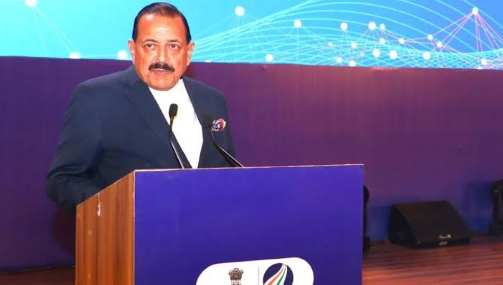
India’s debris-free space target for 2030 is driving efforts to develop technologies for removing orbital debris. Union Minister of State for Science and Technology Jitendra Singh said India is emerging as an early global pioneer in this field.
Speaking on Thursday, Singh inaugurated Cosmoserve Space’s Base 1 facility. He congratulated the startup for its work in active debris removal (ADR) and in-orbit servicing.
The minister said India was advancing technologies to make outer space safer. Furthermore, he highlighted the growing contribution of private companies to the country’s space capabilities.
Cosmoserve Space inaugurates 14,800-square-foot facility
The newly inaugurated Base 1 facility spans 14,800 square feet. It houses infrastructure for designing, building, testing and operating space robotics technologies.
According to the statement, the facility includes specialised orbital rendezvous and capture laboratories. It also features space robotics innovation labs and microgravity simulation platforms.
Additionally, the centre has clean rooms for satellite integration. These facilities will support the development and testing of technologies for future space missions.
Singh congratulated Cosmoserve Space founder and CEO Dr Chiranjeevi Phanindra and his team. He also highlighted the startup’s Mission EMBRACE, which tested soft robotic petals in space in July 2026.
The test took place within a year of the company’s formation. Consequently, Singh cited the milestone as evidence of the growing technological capabilities of India’s private space startups.
Cosmoserve Space builds industry partnerships
Singh highlighted the team’s experience at ISRO and its involvement in the Gaganyaan programme. He said the team was bringing this experience into a collaborative private-sector model.
Cosmoserve Space has also established partnerships across the space industry. These include Pixxel for satellite systems, Dhruv Aerospace Netherlands for propulsion systems and Skyroot Aerospace for launch services.
According to Singh, these partnerships demonstrate an emerging culture of end-to-end collaboration. They also bring together indigenous payloads, battery technologies, satellite systems and private launch capabilities.
Furthermore, such collaborations can support integrated space missions and help Indian companies develop technologies for global markets.
India’s space economy projected to reach $40-45 billion
Singh said India’s space economy had grown to nearly $9 billion. He projected that it could reach $40-45 billion over the coming decade.
Meanwhile, India’s space startup ecosystem has expanded from a single-digit number of companies to nearly 450 enterprises.
The minister called on domestic and international investors to participate more actively in the sector. He also urged greater philanthropic support for science and research.
He said stronger investment and collaboration would accelerate innovation and support emerging technologies. These efforts will contribute to India’s broader ambition of achieving a debris-free space environment by 2030.