


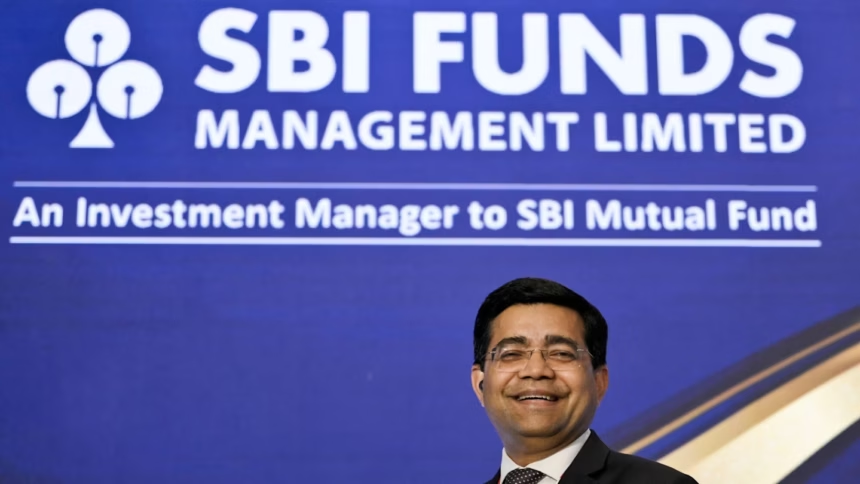
India AI investment slowdown could redirect global capital towards other markets, potentially benefiting the country’s financial markets, according to a report by SBI Funds.
The report said concerns over the sustainability of artificial intelligence-related capital expenditure are beginning to reshape global capital flows. However, the scale of any shift will depend on future AI revenues and investment returns.
AI-related capital expenditure is projected to average around 3.6 per cent of US GDP between 2025 and 2032. This would significantly exceed spending during previous investment booms.
The report compared the projected figure with 1.1 per cent during the dotcom cycle in 2000. It also cited 2.2 per cent during the 19th-century railroad boom.
AI investment boom raises concerns over financing costs
The unprecedented rise in AI capital expenditure has supported strong economic growth, particularly in the United States. Meanwhile, substantial borrowing by hyperscalers and technology companies has put pressure on long-term bond yields.
The report warned that doubts over AI revenues could challenge the sustainability of current investment levels.
“If AI revenues come into doubt, sustaining capex at current financing costs could come under question. The effects would spread to related sectors, US equities, US growth and how money is allocated across asset classes,” the report said.
Furthermore, the report highlighted the concentration of global capital in AI-linked investments.
“The AI trade has sucked in capital from most other assets, and any weakening of that trade should mean capital moving to other areas,” it noted.
Such a shift could create opportunities for markets outside the AI investment cycle, including India.
Indian equities gain as emerging markets decline
Indian benchmark indices ended October with gains despite a broader sell-off across emerging markets.
The Nifty rose approximately 1.9 per cent during the month, while the Sensex gained around 2.7 per cent. Consequently, India remained among the few major markets to advance.
In comparison, the MSCI Emerging Markets index declined 6.6 per cent. South Korea and Taiwan, which had led gains earlier in the year through AI-linked investments, fell 16.2 per cent and 5.7 per cent, respectively.
The report also noted that crude oil markets reacted sharply to the mid-term outcome. Brent crude prices fell below $100 per barrel from $115 per barrel in October.
India’s economic indicators remain resilient
India’s economy has continued to show resilience despite elevated energy prices. The report said higher energy costs could affect inflation and government finances.
However, key economic indicators have remained relatively strong.
India’s merchandise exports increased approximately 23 per cent in the third quarter of 2026. The report attributed the growth to a recovery in global trade and India’s improved tariff position relative to other countries.
These developments could support India’s position as global investors reassess asset allocation. However, the potential benefit will depend on how capital flows evolve amid changing AI investment expectations.