


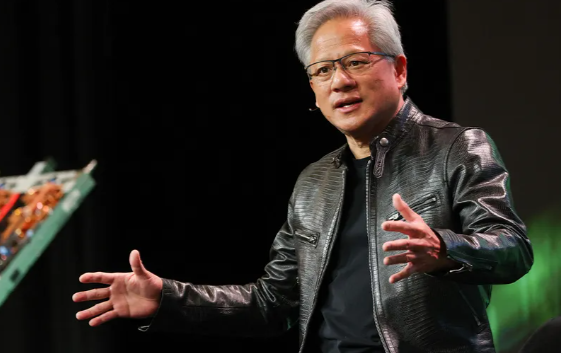
Nvidia CEO Jensen Huang has resigned following reports of two extramarital relationships. The controversy includes allegations involving a businesswoman suspected by US intelligence of links to China.
Nvidia announced the leadership change on Thursday, November 12. The company’s board appointed Chief Financial Officer Colette Kress as interim CEO.
Kress will continue as CFO while the board searches for a permanent successor. The board will consider both internal and external candidates.
The resignation marks a major leadership change at the company. Huang co-founded Nvidia and led its transformation into a dominant supplier of artificial intelligence chips.
Allegations involving businesswoman raise security concerns
The controversy centres on Huang’s reported relationship with Alice Huang, also known as Huang Le. She is a businesswoman associated with Singapore-based cloud computing company Megaspeed International.
US intelligence agencies reportedly suspected her of links to China’s Ministry of State Security. However, the allegations have not been independently established, and China has denied any intelligence connection.
Reuters reported that it could not independently verify the espionage allegations. The reports also linked Megaspeed to concerns over the routing of advanced Nvidia chips to China.
Huang had previously advocated allowing Nvidia to sell advanced chips to China. His position had drawn scrutiny amid US restrictions on semiconductor exports.
The controversy also intensified after reports of another relationship involving an Nvidia employee. The New York Times reported that the employee was Kimberly Powell, Nvidia’s vice president of healthcare.
These reports added pressure on Huang as the company’s board examined the allegations. Nvidia had earlier said it had no reason to believe company secrets or national security were compromised.
Colette Kress takes charge as interim CEO
Kress faces the task of leading Nvidia through a period of heightened scrutiny. She joined the company in 2013 and has led its finance organisation.
Huang had maintained a highly centralised leadership structure. Around 60 department heads reportedly reported directly to him, making the transition particularly significant.
The board has also appointed Harvey C. Jones as its first-ever chair. It will oversee the search for Huang’s permanent replacement.
Nvidia crisis raises concerns across AI industry
Huang’s departure has implications beyond Nvidia’s corporate leadership. The company supplies chips that underpin major AI developers and data centre operators.
Consequently, any prolonged leadership uncertainty could affect investor confidence across the AI sector. The controversy has also intensified scrutiny of US chip export policy towards China.
Nvidia shares came under pressure following reports of the leadership crisis. The developments have raised questions about corporate governance, succession planning and the company’s exposure to geopolitical risks.
The episode places Nvidia at a critical transition point. Its next leadership team will need to maintain its technology position while addressing investor and regulatory concerns.