

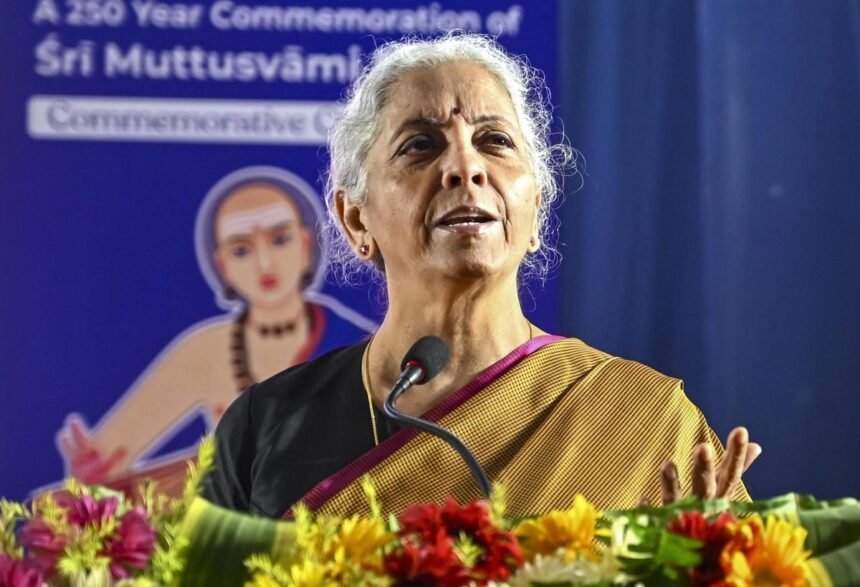
India poverty reduction efforts have undergone a fundamental shift from temporary relief to addressing barriers that perpetuate deprivation, Finance Minister Nirmala Sitharaman said on Monday.
Reflecting on the latest World Bank report, Sitharaman said nearly 50 crore Indians moved out of poverty between 2011 and 2023. The report also indicated that extreme poverty had been almost eradicated.
In an article published on LinkedIn, the finance minister said the findings reflected a transformation she had witnessed firsthand.
She added that India could approach the next two decades with confidence. Furthermore, she reiterated the government’s commitment to achieving Viksit Bharat by 2047.
From poverty relief to targeted interventions
Sitharaman said eradicating mass poverty remained an unfulfilled promise for more than six decades after Independence.
Even in the early 2010s, India faced significant deprivation in sanitation, nutrition, clean cooking fuel and banking access. The prevailing approach focused largely on transferring money to poor households.
However, the government changed this approach over the last decade. Guided by the Antyodaya principle, it focused on addressing deprivation at the household level.
Sitharaman said government interventions targeted beneficiaries and focused on measurable outcomes. Each scheme required identification, effective delivery and follow-up to reach the last household.
She also credited Prime Minister Narendra Modi with personally monitoring implementation. His interventions helped resolve bottlenecks, ensure follow-ups and promote technology-based delivery, she said.
Welfare schemes improve access to basic services
The finance minister highlighted several government programmes that have contributed to improvements in living conditions.
Under the Swachh Bharat Mission, household toilet access has improved sanitation. The programme has also helped avert an estimated 60,000-70,000 infant deaths annually.
Meanwhile, the Jal Jeevan Mission expanded rural tap-water connections from around three crore households in 2019. The number has since reached nearly 16 crore households.
Sitharaman said the programme reduced the burden of collecting water, particularly for women and girls. It also helped reduce exposure to waterborne diseases.
Additionally, the Ujjwala Yojana has expanded access to cleaner cooking fuel. The Pradhan Mantri Awas Yojana has provided households with permanent homes.
Ayushman Bharat has strengthened financial protection through cashless hospital care. Together, these schemes help households manage expenses and avoid financial setbacks, she said.
Direct transfers and women’s economic participation
Sitharaman also highlighted the role of technology in improving welfare delivery. She contrasted the current system with an earlier estimate that only 15 paise of every rupee reached intended beneficiaries.
Direct Benefit Transfer has helped change that system. Moreover, more than 59 crore Jan Dhan accounts enable benefits to reach recipients directly.
Under the MUDRA scheme, the government has sanctioned 60 crore loan accounts. Women account for around two-thirds of these accounts, Sitharaman said.
Furthermore, PM SVANidhi and PM Vishwakarma support street vendors and traditional artisans. These programmes aim to expand access to credit and livelihood opportunities.
The minister said more than 3.7 crore women had become Lakhpati Didis. Some have also progressed to become Crorepati Didis.
Others, trained as Namo Drone Didis, now provide drone-spraying services to farmers. Consequently, women previously excluded from economic opportunities are building enterprises and independent livelihoods.
Next phase focuses on preventing a return to poverty
Sitharaman said India still faced challenges despite the progress achieved. The next phase must lift people remaining at the bottom of the economic ladder.
At the same time, the government must ensure that households which have moved out of poverty continue to advance. Preventing them from slipping back into poverty will remain an important priority.
She said the commitment to Viksit Bharat by 2047 would require sustained efforts. The government aims to build on existing welfare gains while addressing remaining gaps.