

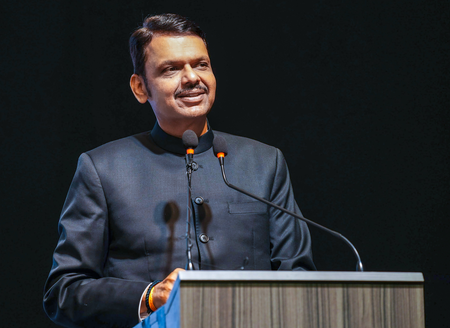
Maharashtra Chief Minister Devendra Fadnavis has directed state departments to accelerate digital governance reforms. The state aims to deliver a new level of citizen services by January 26, 2027.
Speaking at the launch of 174 digital services and initiatives on Thursday, Fadnavis said Maharashtra was moving towards “zero bureaucracy”. The approach seeks to minimise human intervention, remove redundant procedures and improve service delivery.
The state has completed 397 of its 1,129 Governance Process Re-engineering (GPR) tasks. This represents around 35 per cent of the total target.
Maharashtra launches 174 services across three platforms
The latest rollout covers three digital platforms. These include 76 services on Maitri 2.0, 74 on Aaple Sarkar (RTS) 2.0 and 24 under Direct Benefit Transfer through MahaDBT 2.0.
Furthermore, the state has rationalised around 350 services and issued 729 Government Resolutions (GRs). Fadnavis said additional key services would become operational by December 24.
Departments must complete pending approvals and technical tasks by December 31. The government has set January 26, 2027, as the broader implementation milestone.
The event was attended by Deputy Chief Minister Sunetra Ajit Pawar, Ministers Pankaja Munde and Ashish Shelar, Chief Secretary Rajesh Aggarwal and senior officials.
New platforms target data-led and paperless administration
Alongside the service rollout, Fadnavis unveiled several digital initiatives.
These include MahaSarathi for data-driven governance and improved service accuracy. MahaUplabdhi will allow pensioners and beneficiaries to generate digital life certificates through mobile phones without physical verification.
The government also launched a state-centre correspondence tracking system. Other initiatives include a government quarters allotment system and the Maharashtra Aadhaar Dashboard.
Moreover, the reforms aim to eliminate unnecessary affidavits and repeated document submissions. District collectors and local agencies will strengthen service centres, monitor operations and address grievances.
Maharashtra expands digital support for rural entrepreneurs
Animal Husbandry Minister Pankaja Munde outlined a fully online self-employment scheme for rural youth. MahaIT developed the initiative to support entrepreneurship across livestock and allied activities.
The scheme will cover eggs, milk, poultry, meat production, goat rearing and piggery. It also aims to develop regional production clusters.
General category beneficiaries will receive a 50 per cent subsidy. Meanwhile, women and Scheduled Caste and Scheduled Tribe beneficiaries will receive a 75 per cent subsidy.
The government plans to establish district-level clusters after the first application phase.
Process re-engineering focuses on six pillars
Chief Secretary Rajesh Aggarwal outlined the administrative changes supporting the digital rollout. These include backend development for MahaSarathi, strengthening MahaIT and developing API Setu.
The API platform will connect state systems with central government databases. Consequently, departments can use existing data to reduce repeated documentation.
Aggarwal said the reforms focus on six key areas:
- Scrapping redundant government services.
- Automatically generating certificates using existing data.
- Merging overlapping services.
- Reducing application fields and document requirements.
- Cutting approval layers.
- Decentralising decision-making powers.
More than 100 redundant services have already been scrapped. Additionally, documentation requirements have fallen by over 50 per cent.
Most departments have also delegated powers to field-level officers, Aggarwal said.
Government links digital delivery with constitutional rights
Information Technology and AI Minister Ashish Shelar linked the rollout to Constitution Day. He said faster and more transparent delivery of public schemes helps citizens exercise their constitutional rights.
Fadnavis has asked departments and district administrations to accelerate implementation ahead of the January deadline. The state now faces the task of translating its completed process reforms and digital launches into accessible services for citizens.