


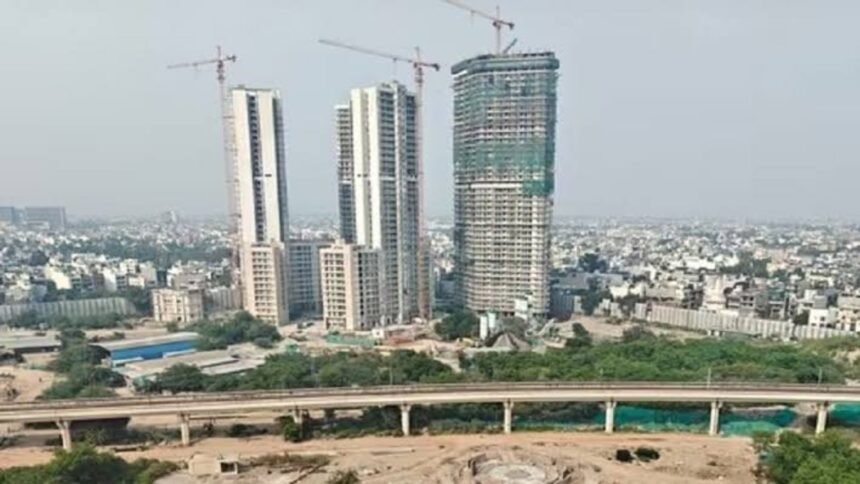
Delhi urbanises 48 villages across the capital’s seven revenue areas under a new notification issued by the Department of Urban Development. The move removes these villages from the rural-area classification and brings them under the urban framework, potentially opening new avenues for real estate development.
The notification was issued under Section 507(a) of the Delhi Municipal Corporation Act, 1957, exercising powers granted to the Lieutenant Governor of the National Capital Territory of Delhi.
The government described the decision as a step towards planned development and improved civic infrastructure.
Of Delhi’s 357 villages, 309 were already covered under the urban framework. With the latest notification, all 357 villages will fall within the urban classification.
However, industry executives said the actual impact on property development and investment will depend on infrastructure creation, connectivity, land-use permissions and implementation of planning regulations.
Delhi urbanises 48 villages across seven revenue areas
Most of the villages covered by the notification are concentrated in the Outer North and South West revenue areas.
In Outer North, the villages include Bakoli, Hamidpur, Palla, Kulakpur, Rajpur Kalan, Tajpur Kalan, Mungeshpur and Auchandi.
The South West area includes Dhansa, Rawta, Jhatikara, Kanganheri, Ghumanhera, Shikarpur, Issapur and Kair, among others.
Ashish Bhutani, CEO of Bhutani Infra, said the move could attract investment and create residential and commercial opportunities if supported by integrated infrastructure, better connectivity and transparent development regulations.
He said timely infrastructure development and a clear planning framework would be essential to realise the potential benefits.
Real estate gains depend on infrastructure and regulations
Industry representatives cautioned that urban classification alone would not guarantee immediate development or higher property prices.
Kapil Chugh, vice-president of sales at Rise Infraventures Limited, said buyers and investors should assess each location based on its connectivity, existing infrastructure and applicable development regulations.
The notification could create opportunities for developers, but the pace and scale of construction will depend on how authorities address these requirements.
Ankush Kaul, chief business officer at TARC Limited, said the success of the initiative would depend on balancing Delhi’s growth ambitions with residents’ needs while creating long-term value for homebuyers and investors.
Ravikant, founder of Elegance Infra and Enterprises, emphasised the need to ensure that development remains inclusive and protects the cultural heritage of village communities. He added that coordination among stakeholders would be important for the development of these areas.
Delhi Master Plan 2047 adds to housing demand
The urbanisation notification follows the Delhi Development Authority’s approval of the Master Plan for Delhi 2047 (MPD-2047) in August. The plan is intended to replace the delayed MPD-2041.
Delhi’s population is projected to reach 32 million by 2047, compared with the current estimate of 23 million. The projected growth is expected to generate demand for nearly four million additional homes.
The expanded urban framework could provide scope for future development, but translating that potential into housing supply will require coordinated planning, civic infrastructure and clear development permissions.
For buyers and investors, the long-term implications will therefore vary by location. Improved urban status may create new possibilities, but actual property development and price movements will depend on implementation and local conditions.