

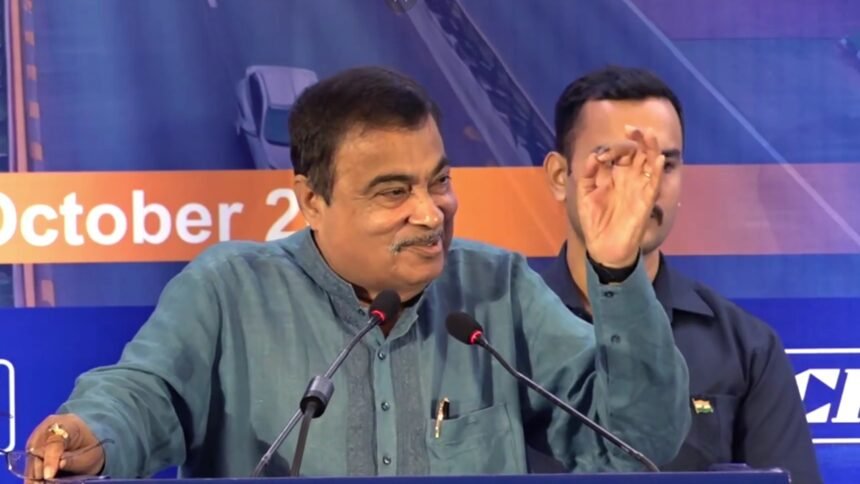
E20 criticism was a paid campaign orchestrated to derail India’s biofuel initiatives, declared Union Minister for Road Transport and Highways Nitin Gadkari during a Confederation of Indian Industry (CII) event in New Delhi on October 27, 2026. Addressing industry leaders, the Minister dismissed opposition concerns regarding 20 per cent ethanol-blended petrol (E20). Furthermore, the statement came immediately after the government notified amendments to the Central Motor Vehicles Rules 1989 to permit flex-fuel vehicles capable of running on up to E100 fuel.
Vehicle performance metrics and highway network expansion
Defending the Ethanol Blended Petrol (EBP) Programme, the Minister pointed out that over 20 crore two-wheelers and 3 crore petrol cars have operated smoothly on E19-20 blends for three years. Consequently, no verified evidence exists showing widespread engine failures or vehicle breakdowns attributable to ethanol blending.
Additionally, the Minister highlighted substantial progress across India’s national highway network. Specifically, four-lane national highways increased 2.6 times since 2014, while dedicated high-speed corridors grew twelvefold to reach 6,788 km in 2026.
| Highway & Biofuel Infrastructure Parameter | Official Growth Metrics & Data |
| Flex-Fuel Vehicle Limit | Up to E100 (100% ethanol capability) |
| Active E20 Vehicle Fleet | >20 crore two-wheelers & >3 crore petrol cars |
| Total National Highway Network | Expanded to 1.46 lakh km in 2026 (from 91,287 km in 2014) |
| High-Speed Corridor Expansion | Expanded 12 times to 6,788 km in 2026 |
| Delhi-Haridwar Travel Time Target | Reduced to 90 minutes within two months |
Infrastructure investment, religious tourism, and vehicle safety codes
Emphasizing the economic multiplier effect of infrastructure spending, Mr Gadkari noted that every ₹100 spent on road development generates ₹325 in broader economic impact. Furthermore, 80-85 per cent of the Char Dham road project stands complete, tripling tourist movement to Uttarakhand’s spiritual sites.
Meanwhile, following highway quality reviews covering 800 projects, the ministry announced plans to introduce a mandatory truck body code to complement existing bus body regulations. Therefore, as E20 criticism was a paid campaign according to central leadership, the administration continues to prioritize clean energy transition alongside highway construction.