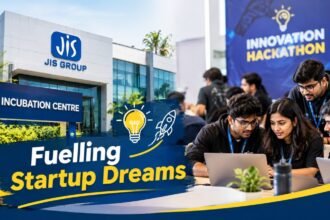



Speaking at the valedictory session of the RISE Conclave 2026, West Bengal Science and Technology Minister Kalyan Chakrabarti emphasized the need to transform the state’s research capabilities into a launchpad for global enterprises.
Pointing to West Bengal’s rich scientific heritage—including pioneers like Jagadish Chandra Bose, Prafulla Chandra Ray, and Meghnad Saha—Chakrabarti stressed that the ultimate measure of success should not be the volume of research papers published, but the number of real-world problems solved and technologies commercialized.
“The laboratory must lead to the marketplace. The entire innovation chain must ultimately improve the quality of life of our citizens,” Chakrabarti stated during the address.
Key Pillars of the Proposed Innovation Ecosystem
- The Triple Helix Partnership: Innovation relies on a cohesive alliance between academia and research institutions (generating knowledge), industry (converting it into commercial products and services), and the government (providing infrastructure, funding, and regulation).
- Focus on Deep-Tech Frontiers: The minister underscored the importance of advancing in high-impact sectors such as robotics, semiconductors, advanced materials, climate tech, and new energy systems to remain globally competitive.
- Shifting from Job Seekers to Job Creators: Highlighting the changing aspirations of youth, Chakrabarti emphasized that startups play a critical role in fostering an entrepreneurial mindset that creates employment rather than merely seeking jobs.
- Complete Innovation Pipeline: The state aims to bridge every stage of development—moving smoothly from initial ideas and prototypes to intellectual property, incubation, commercialization, and international markets.
Aligning the vision with India@2047, the minister concluded that building a thriving knowledge-based economy requires homegrown technologies and globally competitive enterprises rather than relying solely on designs imported from elsewhere.