Asian real estate capital is returning, yet investors exercise growing caution toward projects demanding massive capital resources and extended payback periods. According to a Knight Frank report released on October 30, 2026, commercial real estate investment in Asia Pacific reached $65.6 billion in the third quarter, up 7.3% year on year. Even as capital flows expand, elevated borrowing costs accelerate a shift toward assets offering predictable income streams and volatility resilience.
This selective trend imposes new imperatives on urban developers. Capital scale alone fails to convince institutional investors without balance sheet strength, execution speed, and genuine end-user utility. For megacities spanning multi-decade development cycles, developer endurance determines whether an entire master plan materializes beyond initial sales launches.
Regional Megacity Precedents and Scale
Across Asia, integrated megacities serve as primary answers to urbanization pressures. UN ESCAP projects Southeast Asian urban land area will double between 2010 and 2050. Regional precedent demonstrates that grand master plans mark only a starting point. BSD City in Indonesia spans roughly 6,000 hectares, developed by Sinar Mas Land since 1984, taking nearly four decades to reach 500,000 residents. Conversely, Forest City in Malaysia was designed for 700,000 residents, yet Bloomberg reported only around 9,000 occupants by 2023 following developer financial distress. The real divergence between these models hinges on capital endurance over time, turning blueprints into thriving habitats.
Against this backdrop, Vinhomes currently manages 32 operating developments serving roughly 650,000 residents. Ocean Park, Grand Park, and Smart City, all launched in 2018, house approximately 102,000, 99,000, and 70,000 residents, respectively. Through Vinhomes Green Paradise spanning 2,870 hectares and Vinhomes Global Gate Ha Long covering over 6,200 hectares, the developer expands to a scale matching the region’s largest megacities. Parent company Vingroup ranked 26th on the 2026 Fortune Southeast Asia 500 list. The next operational test centers on replicating rapid resident intake across thousands of hectares.
Financial Strength Provides Runway for Multi-Decade Megaprojects
For phased megacities, the primary risk stems from the timeline mismatch between urban maturity and capital cycles. Chantale Wong, former United States Executive Director to the Asian Development Bank, observed: “Urban visions span generations, whereas financing operates on much shorter cycles.” She noted that Bonifacio Global City in Manila accumulated value over nearly 30 years through properly sequenced infrastructure and patient capital. Savills Vietnam highlights that when auditing large-scale developments, institutional investors evaluate debt obligations and sustainable cash flow generation alongside legal compliance and development feasibility.
According to financial results disclosed on October 30, 2026, Vinhomes recorded nine-month consolidated net revenue of 202,586 billion VND, up 302% year on year. Net profit after tax reached 75,059 billion VND, surging 390% and surpassing its annual target by 25%. Contracted sales totaled 219,600 billion VND, representing a 35% increase. Third quarter contracted sales alone reached 71,500 billion VND, with retail channels generating 81% of volume, driven by contributions from Vinhomes Saigon Park, Vinhomes Global Gate Ha Long, and additional projects. By late September, unbilled backlog sales reached 185,600 billion VND, roughly 1.7 times the 2021 to 2025 historical average, securing revenue visibility for upcoming quarters.
Balance Sheet Resilience and Project Execution
Asset reserves expanded significantly. Total assets reached over 1.33 trillion VND, rising 69% year-to-date, while equity reached nearly 307,800 billion VND. Debt to total assets stood at 18%, accompanied by an interest coverage ratio of 11.3 times. These indicators demonstrate solid financial standing, supporting resource allocation across large-scale developments.
Profit growth must be evaluated alongside revenue composition. Vietcap equity research dated October 30 noted bulk sales contributed substantially to core real estate revenue, alongside strong third-quarter retail growth. Utilizing dual sales channels provides capital recycling flexibility, while sustained financial performance depends on cash collections and delivery timelines. Financial strength faces practical testing at Vinhomes Green Paradise in Can Gio and Vinhomes Global Gate Ha Long. Construction accelerated through late October 2026, with low-rise residential blocks advancing toward completion.
Developing integrated megacities simultaneously across both ends of the country requires capital coordination, timeline management, and quality control across expansive footprints. This balance sheet buffer provides a vital advantage in regional megacity development. A strong balance sheet initiates complex projects; continuous cash flow management throughout investment lifecycles maintains momentum and completes integrated urban ecosystems.
From Execution Capability to Enduring Investment Value
Real estate appeal increasingly ties to post-handover value creation. A Savills Ho Chi Minh City market report released October 21, 2026, noted apartment supply recovering while purchasing power remains constrained by elevated home prices and borrowing costs. Liquidity hinges on individual project attributes, where location, legal clarity, developer track record, and commercial strategy play decisive roles.
This market dynamic elevates synchronized master planned townships. Connecting residential housing with schools, medical facilities, retail hubs, public spaces, and transit networks underpins property value through end-user demand. Operational success depends on amenity completion, resident population scale, and market affordability. Vinhomes’ operational track record at Ocean Park, Smart City, and Grand Park underscores this integrated ecosystem methodology. Corporate figures confirm roughly 650,000 residents occupied Vinhomes townships nationwide by late 2025, providing operational experience in community management, service organization, and urban utility execution. Scale alone does not automatically translate into investment value.
Christine Li, Head of Research for Asia Pacific at Knight Frank, noted that elevated borrowing costs prompt buyers to prioritize fully operational ecosystems over future master plan promises: “Today, holding an unfulfilled promise carries a much higher price.” Projects delivering early infrastructure, public transit, and services while preserving price accessibility maintain commercial appeal. In Vietnam, Dr. Le Xuan Nghia, former Vice Chairman of the National Financial Supervisory Commission, observed that megacities require time for market absorption and achieve success when paired with employment hubs and regional transit. Investors evaluate asset resilience as developments transition from initial sales to operational stability.
Next-Generation Smart Cities and Global Capital Appeal
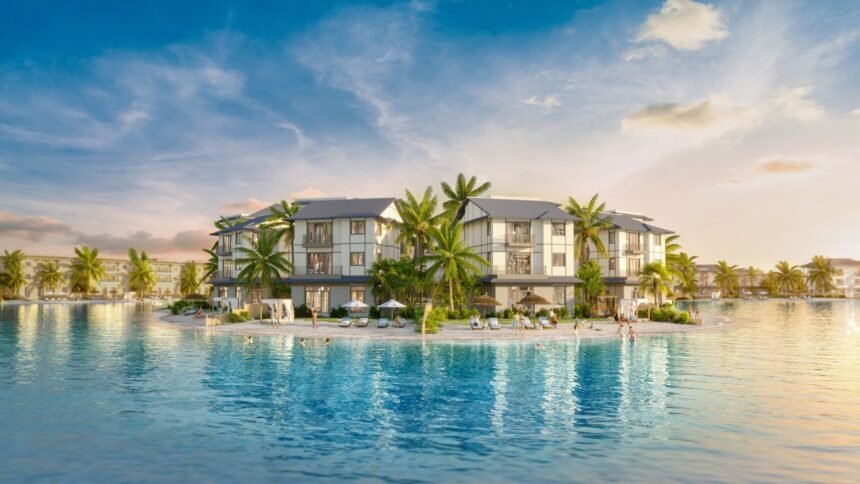
Next-generation megaprojects expand this formula across broader urban functions. Vinhomes Green Paradise targets a coastal green, smart, ecological city, while Vinhomes Global Gate Ha Long combines residential living with commerce, tourism, and services. Executed on schedule, this integrated model generates demand drivers beyond traditional housing, broadening long-term commercial yields.
In August 2026, Vinhomes Green Paradise received Provisional Custom ISO 37122 Smart City Certification from the World Council on City Data. This benchmark provides international validation for smart city master planning, while operational sustainability remains subject to ongoing infrastructure quality and performance. Regionally, financial reserves and development expertise enhance Vinhomes’ competitive edge when engaging global institutional partners. Moving beyond land bank supply or residential sales, the developer participates deeply across the value chain from master planning and infrastructure buildout to urban community operations. International capital attraction remains tied to broader market conditions and project-level financial returns.
As Asian real estate capital enters a selective cycle, financial strength ties directly to investment confidence. For Vinhomes, 2026 operational performance and megacity development progress establish a solid foundation for upcoming growth phases. Converting capital strength into living communities with genuine utility and market-validated asset value reinforces international investment appeal while solidifying its regional market standing.