


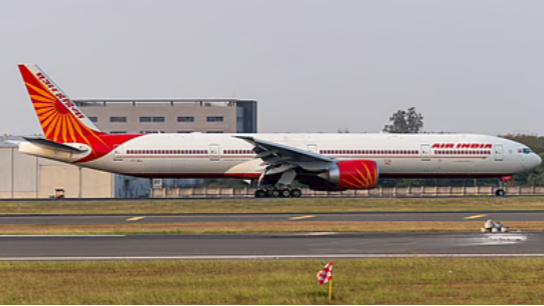
Air India has set a Rs 6,000 crore cost savings target as it explores a dedicated freighter business and in-house tour operations.
CEO and Managing Director Tewolde Gebremariam outlined the plans during a town hall with Air India and Air India Express employees on Wednesday.
The airline group has identified potential savings worth Rs 3,500 crore. Furthermore, it has already achieved around Rs 1,500 crore in cost reductions.
Gebremariam said restoring profitability remained a priority. He expects the group to achieve profitability over the next few years through expense control and revenue growth.
Air India plans group-wide operational efficiencies
Air India established a multidisciplinary team in October to identify cost-saving opportunities and operational synergies.
The two airlines will increasingly operate as one group while retaining separate Air Operator Certificates (AOCs). However, customer-facing, operational and regulatory functions will remain independent.
Enabling functions such as finance, human resources and information technology will increasingly operate at the group level. Additionally, centres of excellence will be managed through a more unified structure.
Air India will continue its full-service operations. Meanwhile, Air India Express will retain its focus on the low-cost carrier segment.
The group has also established a dedicated cost transformation programme led by 11 senior leaders. The team has received more than 1,500 employee suggestions on reducing expenses and improving efficiency.
“Cost discipline is not a one-time exercise. It must become part of our culture,” Gebremariam said.
Dedicated freighter business and tour packages planned
The Air India Group is evaluating a dedicated freighter business to tap opportunities in the air cargo market.
It also plans to establish in-house tour operations and sell travel packages. The airline will work with the Ministry of Tourism on the initiative.
Gebremariam said India offered significant tourism opportunities. He also pointed to growing international travel among middle-class Indians.
He expects tour operations to generate revenue beyond air travel. The business could also support the airline’s passenger operations through bundled travel offerings.
Airline reports improvements in operational performance
Gebremariam said the group had recorded improvements in operational performance over the past three months.
On-time performance (OTP) has improved, while baggage handling has also progressed. The airline reported reductions in mishandled baggage rates.
However, further improvements remain necessary in transfer baggage and minimum connection time performance.
The airline is also adjusting its network amid continuing airspace restrictions. More west-bound connecting traffic is being routed through Mumbai, which faces fewer disruptions from airspace closures.
Delhi will increasingly handle east-bound connecting traffic. Furthermore, the group is evaluating opportunities to strengthen multiple hubs across India, including in the southern region.
“We can’t control the external environment. What we can do is build an airline that is resilient in all conditions,” Gebremariam told employees.
New leadership roles to support growth
The group plans to create two new positions: Group Strategy Officer and Chief of Training Academy.
The training academy head will bring the group’s flying academy, flight training organisations and technical training capabilities under unified leadership.
Air India Express CEO Deepak Rajawat will also join the Air India management team.
Gebremariam identified cost consciousness, accountability and “constructive impatience” as important priorities for the group’s next growth phase.
The airline faces financial and operational challenges, including higher fuel prices and restrictions on Pakistan airspace affecting long-haul operations.
Tata Group-owned Air India reported losses exceeding Rs 22,000 crore in 2025-26. The group is now seeking to improve financial performance through tighter cost controls, stronger operations and additional revenue streams.