

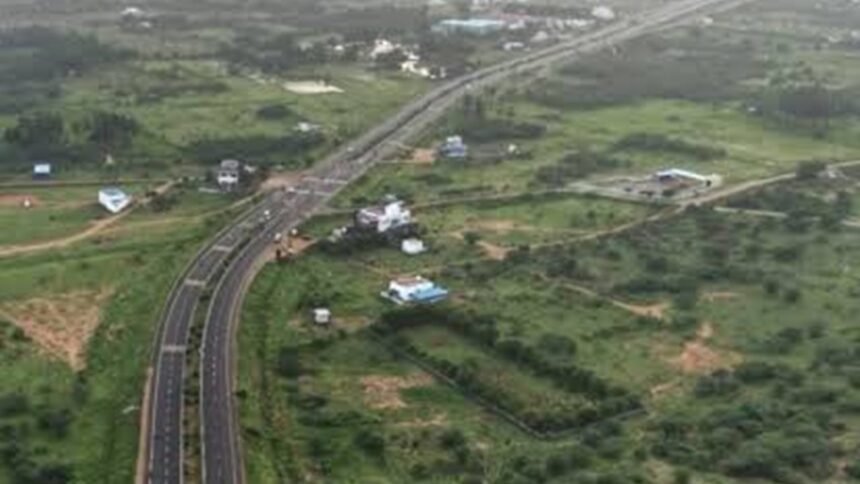
NH-9 and NH-44 highway upgrade initiatives have been cleared by Road Transport and Highways Minister Nitin Gadkari to transform critical arterial corridors across Delhi, Haryana, and Uttar Pradesh. Specifically, the government approved Rs 359.63 crore for upgrading the 12.4-km, 6-lane main carriageway and service roads along NH-9 from Udyog Nagar Metro Station to Tikri Border. Furthermore, an additional Rs 1,123.56 crore has been sanctioned for constructing grade-separated structures on the Delhi–Agra section of NH-44 and NH-19.
NH-9 Rohtak Road corridor transformation
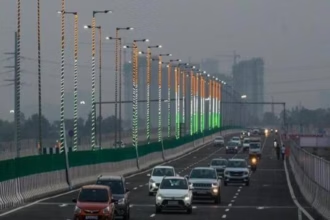
National Highway-9 (Rohtak Road) serves as a vital arterial link connecting Delhi with Bahadurgarh and Rohtak while passing through major localities like Punjabi Bagh, Nangloi, and Mundka. Specifically, the project introduces durable rigid pavement, seamless service road connectivity, and junction improvements to handle heavy suburban and industrial traffic. Additionally, these interventions will significantly reduce traffic congestion and lower long-term maintenance requirements along Delhi’s western periphery.
| NH-9 Project Parameter | Official Approved Details |
| Approved Financial Outlay | Rs 359.63 crore |
| Corridor Stretch | Udyog Nagar Metro Station to Tikri Border (12.4 km) |
| Lane Configuration | 6-lane main carriageway and service roads |
| Key Localities Served | Punjabi Bagh, Peeragarhi, Nangloi, Mundka, Tikri Border |
Delhi–Agra corridor and grade-separated infrastructure
The second major funding allocation targets the Delhi–Agra section spanning Faridabad, Palwal, Mathura, and Agra. Specifically, the initiative addresses heavy traffic density accommodating approximately 68,000 passenger car units (PCU) daily, including freight and tourist vehicles.
To eliminate bottlenecks and enhance traffic efficiency, the plan includes building 3 road over bridges (ROBs), 4 flyovers, and 4 vehicle underpasses (VUPs). Therefore, as NH-9 and NH-44 highway upgrade works progress, the separation of local and through traffic will successfully reduce conflict points and improve overall road safety.