


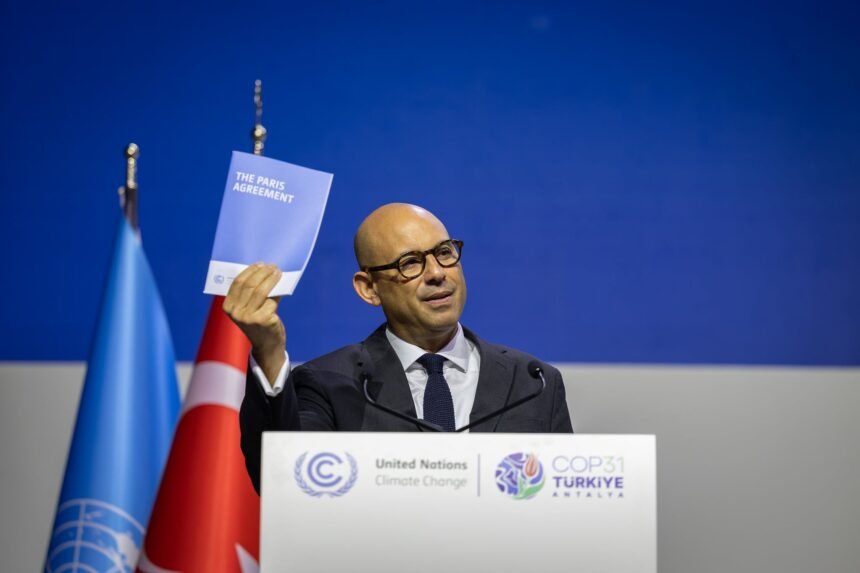
COP31 climate resilient health systems must become a priority in national climate plans, UN Climate Change Executive Secretary Simon Stiell said.
Addressing the Health Day Ministerial Roundtable in Antalya, Türkiye, on November 9, Stiell called for stronger cooperation. He urged countries to translate climate commitments into practical projects protecting hospitals, clinics, health workers and families.
He warned that climate change could turn existing weaknesses in healthcare infrastructure into life-threatening emergencies. These include power failures, unsafe water, extreme heat and disruptions to access to medical facilities.
“Health belongs at the heart of climate action,” Stiell said. He added that climate cooperation could strengthen essential public services amid growing global fragmentation.
Climate risks threaten maternal and community health
Stiell highlighted the growing impact of extreme heat on pregnant women and newborns. He referred to findings from Wellcome, which showed widespread concerns among maternal-health professionals.
Almost every professional surveyed across several countries had cared for a pregnant woman or baby. They believed extreme heat had affected the patient’s health, he said.
At the pre-COP meeting in Fiji, Stiell had described pregnancy and childbirth as a new faultline in the climate crisis.
He also highlighted how vulnerable communities face greater risks when healthcare systems lack adequate infrastructure. Power cuts, staff shortages and long journeys can turn routine healthcare challenges into emergencies.
“You can’t ‘stay cool’ when there is no cool place to go,” he said.
Health ministries urged to shape national adaptation plans
Stiell called on countries to integrate health priorities into national adaptation plans from the beginning. He said health ministries should help shape climate strategies and monitor their implementation.
He also urged countries to align sector-specific health plans with broader national climate commitments. This would help ensure that healthcare priorities receive attention during planning and implementation.
He outlined several questions that national adaptation plans should address. These include whether clinics can operate during heatwaves and access safe water after floods.
Plans should also help health workers detect disease outbreaks early. Furthermore, vulnerable communities must receive timely medical care during climate-related emergencies.
Stiell said countries needed programmes to strengthen healthcare infrastructure. These should include resilient facilities powered by clean energy and supported by reliable water supplies.
He also called for better disease surveillance, early-warning systems and training for healthcare workers.
UN climate chief calls for increased adaptation finance
Stiell said climate finance must reach countries facing the greatest climate risks and resource constraints.
He referred to the COP30 call for efforts to at least triple adaptation finance by 2035. He urged countries to translate the commitment into actual financial flows.
According to Stiell, funding should support country-led programmes through existing national systems. He also called for the Antalya Health Accelerator Initiative to connect national priorities with leadership, cooperation and finance.
The initiative aims to bridge the gap between climate plans and healthcare outcomes. It will focus on supporting country priorities rather than creating parallel systems.
Clean energy transition remains essential for healthcare
Stiell stressed that adaptation alone cannot protect healthcare systems against unlimited global warming. He called for a faster and fairer transition away from fossil fuels.
He also reiterated the need to triple renewable energy capacity and double energy efficiency. Reliable clean electricity can keep healthcare facilities operational during climate-related disruptions.
Additionally, cleaner air can reduce health problems and the demand for medical treatment.
“The next Global Stocktake gives us a clock,” Stiell said. He urged countries to report measurable progress in implementing climate commitments.
He said future assessments should reflect stronger clinics, better-equipped health workers and effective early-warning systems. Ultimately, he called for climate cooperation that protects communities and saves lives.