

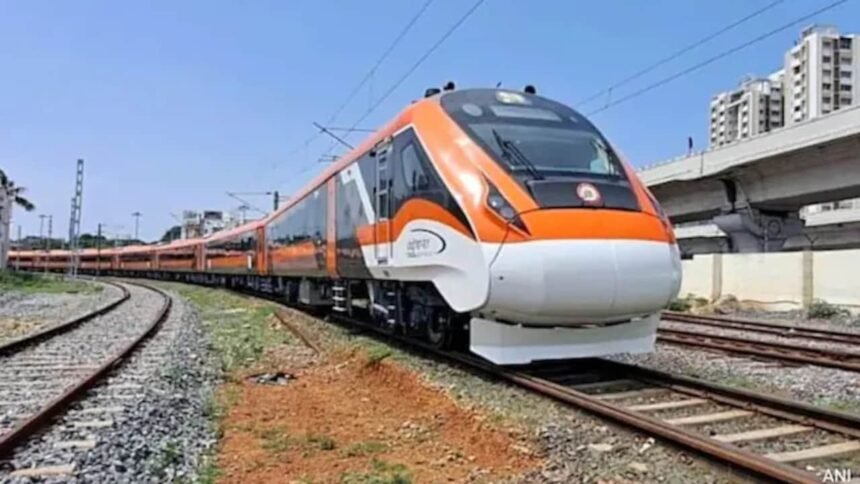
Vande Bharat Sleeper has no separate Tatkal quota, making its berths available under general reservations from the beginning. The premium overnight service has also done away with Reservation Against Cancellation (RAC).
The decision raises an important question. Why would Indian Railways forgo additional revenue from last-minute bookings when passenger operations continue to incur losses?
The answer may lie in the railway network’s experience with dynamic pricing. Previous experiments showed that higher fares can affect occupancy and make premium trains less competitive with airlines.
Indian Railways has traditionally kept passenger fares relatively affordable. However, this comes at a substantial financial cost.
In FY25, passenger and other coaching services incurred an operating loss of Rs 63,721 crore. Meanwhile, freight services generated an operating profit of Rs 50,505 crore.
The Railways uses freight earnings to support passenger operations. This arrangement, known as cross-subsidisation, has remained central to its financial model.
Tatkal and Flexi-Fare are two different pricing systems
Tatkal and Flexi-Fare serve different purposes. Tatkal provides a separate reservation quota that opens shortly before a train’s departure.
Passengers pay an additional charge to secure tickets under this quota. However, Flexi-Fare was designed as a dynamic pricing mechanism.
Indian Railways introduced Flexi-Fare in September 2016 across Rajdhani, Shatabdi and Duronto trains. Under the system, fares increased as more seats were booked.
The experiment, however, produced mixed results. A 2018 audit by the Comptroller and Auditor General (CAG) found that Flexi-Fare affected occupancy in some premium trains.
In AC 3-tier, vacant berths increased from 0.66 per cent to 4.46 per cent after the scheme’s introduction. Furthermore, passenger numbers across the affected premium trains declined by 6.75 lakh during the period examined.
The CAG also compared air and rail fares across 13 overlapping travel sectors. It found that flights became cheaper on several routes when premium train fares reached higher Flexi-Fare slabs.
This created a competitive disadvantage for Railways. Passengers could pay more for a considerably longer journey without necessarily securing a confirmed berth if their tickets remained waitlisted.
Consequently, dynamic pricing risked pushing some passengers towards air travel.
Railways modified Flexi-Fare after passenger feedback
Following passenger feedback and the CAG’s findings, the Ministry of Railways withdrew Flexi-Fare from 15 trains.
These trains had recorded average monthly occupancy below 50 per cent. The ministry also reduced the maximum fare multiplier.
Additionally, it introduced discounts of up to 20 per cent for trains with lower occupancy.
The experience offers an important context for the Vande Bharat Sleeper pricing strategy. The service is positioned as a premium overnight travel option.
Passengers planning overnight journeys typically compare trains with buses and flights. Therefore, predictable fares could help the service remain competitive.
AC 3-tier occupancy could be central to the strategy
Vande Bharat Sleeper has 823 berths, with nearly three-fourths allocated to AC 3-tier. Filling these berths could be important for the service’s financial performance.
AC 3-tier is also a significant revenue contributor for Indian Railways. According to the CAG’s 2026 report, the class generated an operational surplus of Rs 3,645 crore in FY25.
In contrast, Sleeper Class recorded an operational loss of Rs 19,158 crore during the same period.
This difference highlights the financial importance of filling AC 3-tier berths. Higher occupancy could generate more predictable revenue without relying on last-minute fare premiums.
The absence of a separate Tatkal quota may support this approach. It could encourage passengers to book earlier and make fares more predictable.
However, the decision also means Railways will forgo the additional charges associated with Tatkal bookings. Its financial success will therefore depend partly on how effectively it fills available berths.
Japan and Hong Kong offer alternative railway revenue models
Higher passenger fares are not the only way to improve railway finances. International examples show how operators can diversify revenue beyond ticket sales.
Japan provides one such example through East Japan Railway Company (JR East). The Shinkansen operator earns revenue from shopping complexes, station retail, real estate and hotels.
In FY25, transportation accounted for approximately 67 per cent of its consolidated operating revenue. Retail and services, real estate and hotels, and other businesses contributed the remaining 33 per cent.
Hong Kong’s MTR Corporation follows another model through its Rail Plus Property approach. The system connects railway development with commercial and residential real estate.
Under this model, the government grants MTR development rights around proposed stations and depots. The company can then partner with private developers to build residential towers, offices, shopping centres and mixed-use developments.
As railway connectivity improves, surrounding land and property values can increase. MTR captures a share of this value through its property partnerships and development activities.
This creates additional revenue beyond passenger fares. In effect, commercial tenants and property developments also contribute to the railway’s financial ecosystem.
A broader approach to railway revenue
These examples offer a wider lesson for Indian Railways. Higher fares do not automatically translate into stronger financial performance.
For Vande Bharat Sleeper, predictable pricing and higher occupancy could prove more valuable than extracting additional premiums from last-minute passengers.
Meanwhile, diversified revenue streams could offer another route to financial sustainability. Retail, commercial property and station-linked development provide opportunities beyond conventional ticket sales.
The larger challenge is to balance affordable passenger travel with the financial needs of railway operations. A combination of stronger occupancy, disciplined pricing and non-fare revenue could help Indian Railways address that challenge.