
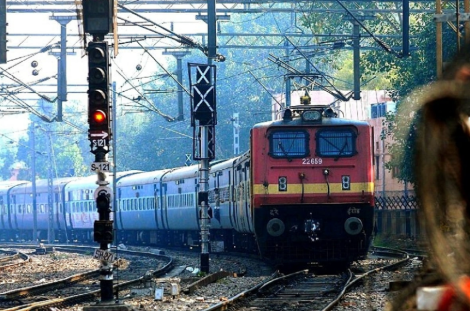
Northeast Frontier Railway electrification has reached 100 per cent across its entire jurisdiction, covering 4,311.96 route kilometres.
The milestone was achieved in less than a decade after electrification work began in 2017-18. NFR officials announced the achievement on Tuesday.
Chief Public Relations Officer Kapinjal Kishore Sharma said the Northeast had no railway electrification before 2014.
The achievement covers railway sections across the Northeastern states, seven districts of West Bengal and five districts of north Bihar. Furthermore, it marks a major shift towards energy-efficient railway operations.
NFR, headquartered at Maligaon near Guwahati, operates across the Northeastern region. Its electrification programme has also improved infrastructure in neighbouring parts of West Bengal and Bihar.
Assam accounts for largest share of electrified routes
According to cumulative figures for 2026-27, Assam accounts for 2,546.04 route km of NFR’s electrified network.
West Bengal has 987.51 route km, while Bihar accounts for 427.49 route km.
The remaining electrified routes cover several Northeastern states:
- Tripura: 269.45 route km
- Mizoram: 52.88 route km
- Arunachal Pradesh: 11.67 route km
- Meghalaya: 9.58 route km
- Nagaland: 6 route km
- Manipur: 1.35 route km
These figures take the total electrified network across NFR’s jurisdiction to 4,311.96 route km.
NFR electrification gathers pace over recent years
Year-wise figures show a substantial increase in electrification activity during the programme.
NFR electrified 915.62 route km during 2023-24. Subsequently, it completed another 1,141.38 route km in 2024-25.
The railway added 445.66 route km during 2025-26. Meanwhile, electrification progress during 2026-27 stands at 141.77 route km.
The latest milestones include completion of electrification on the Lumding-Badarpur section on September 14, 2026. NFR also completed work on the Bairabi-Sairang section in Mizoram on October 12, 2026.
New railway lines to receive electrified infrastructure
NFR is also carrying out electrification alongside ongoing new railway line projects. This will ensure that upcoming infrastructure supports modern electric traction systems.
The completed electrification programme is expected to improve operational efficiency and reduce dependence on fossil fuels. Additionally, electric traction supports cleaner and more energy-efficient train operations.
The achievement aligns with Indian Railways’ broader objective of completing electrification across its broad-gauge network. NFR’s progress marks a major infrastructure milestone for rail connectivity across the Northeast.