

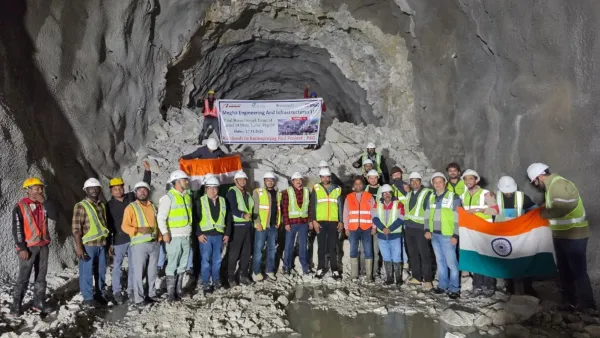
Indian Railways has achieved a breakthrough in the 6.59-km Tunnel-14 of the Rishikesh-Karnaprayag Rail Project in Uttarakhand. The breakthrough connects two excavated sections in Rudraprayag district.
The connected sections extend 4.7 km from Portal-1 at Sumerpur and 1.79 km from Portal-2 at Marora. Consequently, the achievement marks a significant construction milestone for the railway project.
Complex geological conditions required specialised excavation
Construction teams encountered challenging ground conditions during excavation at both portals. At Portal-1, engineers excavated a 110-metre stretch of the triple-track tunnel through loose soil beneath inhabited areas.
The excavation took place under 20-30 metres of soil and rock cover. Furthermore, teams used specialised methods, including pre-excavation and multi-drifting, to maintain safety.
At Portal-2, engineers first stabilised the slope using extensive ground-strengthening measures. These included micropiles reaching depths of 30-35 metres, rock bolts measuring 15-20 metres and consolidation grouting.
These interventions helped address ground settlement issues at Marora. They also enabled the main tunnel excavation to begin in March 2024, following resolution of related land and home acquisition matters.
Safety measures supported Tunnel-14 excavation
Approximately 100 metres of mechanical excavation was carried out at Portal-2. Meanwhile, construction teams used controlled blasting near both portals to protect nearby settlements.
Blasting activities were restricted to daytime hours. Additionally, specialised ventilation systems operated throughout the 4.7-km excavation drive from Portal-1.
The systems supplied fresh air and regulated temperatures inside the tunnel. These measures supported safer working conditions during the extended excavation process.
Rail project aims to improve connectivity in Uttarakhand
The Tunnel-14 breakthrough advances the Rishikesh-Karnaprayag Rail Project, a major railway infrastructure initiative in Uttarakhand.
The project aims to improve rail connectivity to the state’s hill regions. Furthermore, it is expected to make travel easier for pilgrims and tourists visiting important destinations.
Improved accessibility could also support regional development by strengthening transport links across the Himalayan region. The latest breakthrough represents another step towards completing the rail corridor.