


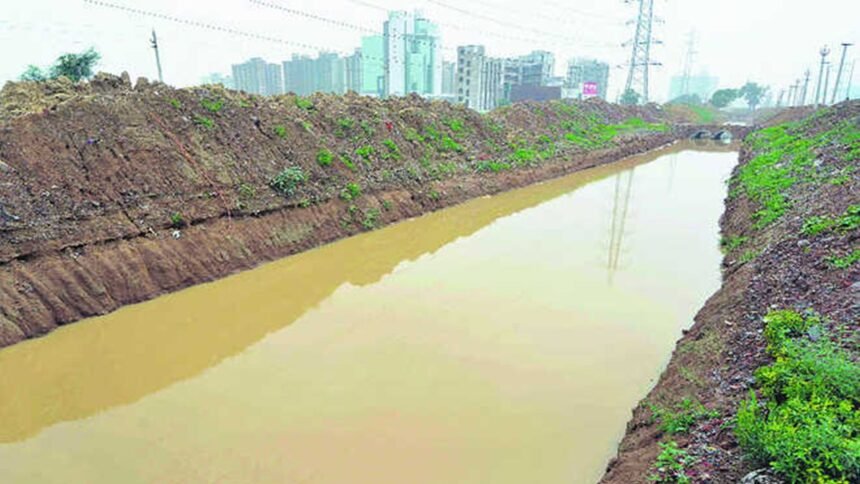
Gwalpahari canal water supply project has encountered fresh delays, with the Gurugram Metropolitan Development Authority (GMDA) now targeting March 2027 to commission the area’s boosting station. Specifically, the Rs 15-crore infrastructure initiative is currently about 70% complete after missing previous projected deadlines in December 2025 and April 2026. Furthermore, residents across Gwalpahari continue to endure massive financial burdens by relying heavily on private water tankers.
Project scope and construction hurdles
The strategic initiative aims to transport treated water from the Chandu Budhera treatment plant to Gwalpahari through a newly built facility. Specifically, the project involves laying a 3.6km pipeline with a 450mm diameter to connect the Sector 72 boosting station with Gwalpahari. Additionally, civil construction features a 4,000-kilolitre underground water storage tank, a sump, and a pump house.
| Infrastructure Component | Current Status & Details |
| Total Project Cost | Approximately Rs 15 crore |
| Overall Completion Rate | Roughly 70% complete |
| Pipeline Construction | 3.6km stretch being laid (approx. 60% complete) |
| New Commissioning Target | March 2027 |
However, officials attributed the delayed timeline to persistent difficulties in procuring specialized machinery and disruptions in material supply chains. Moreover, extreme weather, metal price fluctuations, and Graded Response Action Plan (GRAP) restrictions temporarily stalled active construction work.
Resident impact and future demand projections
Local housing societies face crippling monthly expenditures due to the lack of municipal piped water. Specifically, Rachna Pahwa, RWA president of Valley View Estate, noted that her society alone spends over Rs 1 crore annually to procure 2.5 lakh litres of water daily via private tankers. Additionally, excessive groundwater extraction remains environmentally unsustainable within the fragile Aravali region.
Once fully operational, the pipeline will supply treated water to prominent residential and commercial complexes, including Paras Quartier, Ireo Gurgaon Hills, and Vatsal Valley. Therefore, as the Gwalpahari canal water supply project moves toward its revised 2027 deadline, local authorities face mounting pressure to support a population projected to exceed 51,700 by 2041.