

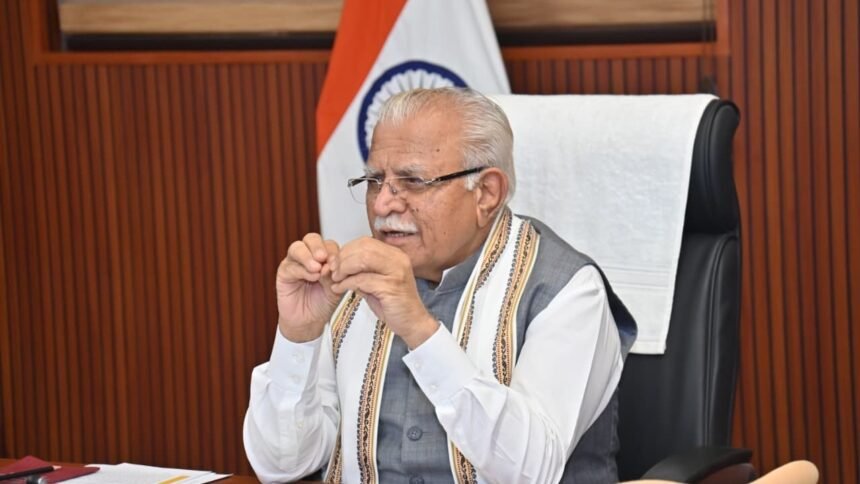
Transport infrastructure drives economic growth and acts as the chief catalyst for modern city development, stated Union Minister for Housing and Urban Affairs and Power Shri Manohar Lal during his keynote address at the 19th Urban Mobility India (UMI) Conference in Bhubaneswar. Emphasizing that transit planning must integrate with city development from the outset, the Minister outlined India’s future urban transit vision anchored on the 3-I framework—Integration, Inclusiveness, and Intelligence.
Driving national growth through the 3-I mobility framework
Under the integration pillar, the Minister highlighted seamless connectivity across metro, bus, and rail lines alongside strong first- and last-mile links. Furthermore, inclusiveness ensures safe, accessible public transit for women, senior citizens, and persons with disabilities, while intelligence leverages artificial intelligence and real-time data to boost operational efficiency.
Additionally, the Centre approved nine metro rail projects covering 174 km at over ₹59,000 crore since December 2025. Consequently, an extra 102 km became operational, expanding India’s total working metro network to 1,185 km across 26 cities.
| Strategic Urban Transit Parameters | National Expansion Data & Metrics |
| New Metro Approvals (Since Dec 2025) | 9 projects covering 174 km (>₹59,000 crore) |
| Active Operational Metro Network | 1,185 km across 26 Indian cities |
| PM e-Bus Sewa Operations | 1,100 e-buses active across 28 cities (~2.5 lakh daily riders) |
| Delhi TOD Policy Extent | 207 sq km along metro, RRTS, and railway lines |
| UMI Conference Participation | 1,500 delegates from India and international regions |
Electric mobility and Transit-Oriented Development expansion
Reviewing progress under the PM e-Bus Sewa scheme, the Minister shared that 1,100 electric buses now serve 2.5 lakh daily passengers across 28 cities. Furthermore, he noted that Delhi’s Transit-Oriented Development (TOD) Policy approved in April 2026 will enable planned urban growth and affordable housing across 207 sq km along key transit corridors.
Therefore, as transport infrastructure drives economic growth across India’s rapidly expanding urban landscape, the government remains committed to scaling multi-modal, technology-driven, and accessible transit networks.