
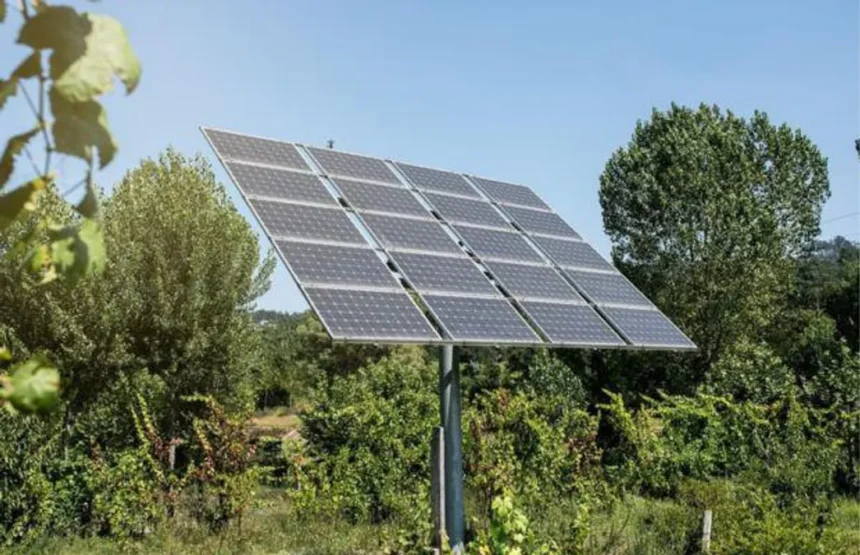
Indus Towers has installed solar systems at 50,000 telecom sites across India, adding around 300 MW of capacity. The company aims to double this count to 100,000 sites by FY29.
The deployment is part of its efforts to reduce energy costs, lower diesel consumption and improve the reliability of its telecom infrastructure network.
“We have saved about 8 to 10% cost per kilowatt in our ecosystem,” Prachur Sah, managing director and chief executive of Indus Towers, told ET.
Solar-powered sites cover 18.5% of network
The 50,000 solar-equipped locations account for around 18.5% of Indus Towers’ total network of 270,480 towers as of September 2026.
The company accelerated its solar deployment programme in 2024. Its approach combines solar installations with high-capacity lithium-ion batteries, digital energy-management systems and smart meters.
These technologies help optimise electricity consumption across its network. The combined measures have also supported a reduction in diesel use.
Indus Towers reduced diesel consumption by almost 11% in the first half of FY27 compared with the year-ago period, Sah said. The reduction came despite operational challenges linked to monsoon conditions, weather disturbances and electricity shutdowns.
Solar deployment driven by operating cost savings
The company said the investment case for solar power is linked to the cost difference between renewable and conventional energy sources.
Solar installations can also help maintain network availability during grid outages by reducing dependence on diesel generators.
Sah said the capital expenditure for a solar-equipped telecom site was comparable to, or slightly higher than, the cost of rooftop solar installations at homes. However, he said the investment offered longer-term commercial benefits for both Indus Towers and its customers.
The company’s solar deployments span states such as Rajasthan, Tamil Nadu, Andhra Pradesh and Maharashtra. Some sites in Jammu and Kashmir operate entirely on solar power and battery storage, Sah said.
Indus Towers eyes solar expansion in Africa
Indus Towers is targeting 100,000 solar-powered sites by FY29. However, geographical constraints can limit installations at certain locations.
Building shadows and tree cover, particularly in densely populated areas, can affect the feasibility of solar deployment.
The company’s energy-management capabilities could also support its overseas operations. Indus Towers has begun generating revenue from initial tower deployments in Zambia and Uganda.
The company sees its experience in managing energy costs as a potential differentiator in African markets. Electricity supply constraints and diesel transportation costs can make telecom tower operations expensive in the region.
Sah said the company’s engineering and energy-management capabilities would also be leveraged across its African operations.