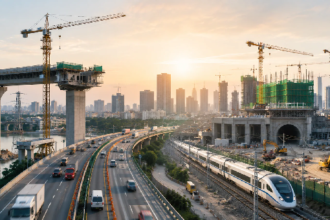

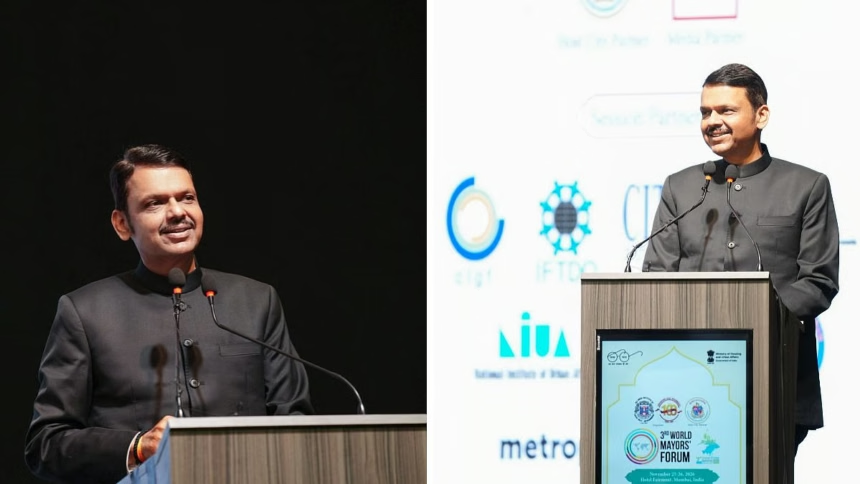
Maharashtra has set a target to attract $100 billion in infrastructure investments over the next five years. Chief Minister Devendra Fadnavis announced the target on Wednesday, outlining plans for urban expansion and transport development.
The state plans to invest around $50 billion in the Mumbai Metropolitan Region (MMR). Projects include metro networks, roads, flyovers, tunnels and civic infrastructure.
Additionally, the government plans to develop two new urban centres. These include ‘Third Mumbai’ around Navi Mumbai International Airport and ‘Fourth Mumbai’ along the Virar-Vadhavan corridor.
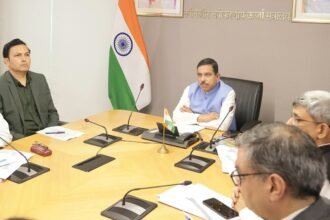
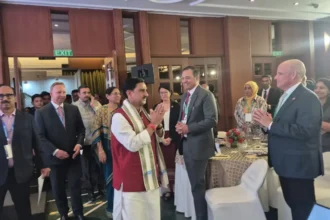
Fadnavis announced the plans while addressing the Third World Mayors’ Conference in Mumbai. The event marked the centenary year of the All India Institute of Local Self-Government.
Third Mumbai to house education, sports and innovation hubs
Fadnavis said cities should be viewed as engines of economic growth rather than development challenges. He noted that urban centres contribute around 65 per cent of India’s GDP.
More than half of Maharashtra’s population lives across nearly 400 cities, he added. Therefore, the Chief Minister called for planned urban development to improve economic opportunities and living standards.
The proposed Third Mumbai will develop around Navi Mumbai International Airport. It will include dedicated Edu-City, Sports City, Medi-City, Innovation City and Global Capability Centre hubs.
The educational hub is expected to accommodate around one lakh students. It will host campuses of 12 international universities, with seven already operational, according to Fadnavis.
The Chief Minister also credited the Centre’s post-2014 approach to urbanisation with encouraging cities as development opportunities. He said earlier efforts to restrict urban growth had contributed to unplanned expansion and inadequate civic amenities.
Virar-Vadhavan corridor planned as Fourth Mumbai
The state plans to develop the Virar-Vadhavan belt as Fourth Mumbai. A major port is under construction at Vadhavan, which Fadnavis expects to rank among the world’s top 10 ports.
The region will connect with Mumbai through the bullet train and a super expressway. Meanwhile, the state is investing in MMR’s transport and civic infrastructure.
The planned metro network will extend beyond 300 km. Other projects cover roads, tunnels, water supply and sewage treatment.
Fadnavis said the 22-km Atal Setu has reduced travel time to Navi Mumbai International Airport to around 40 minutes. The government aims to bring this down to 30 minutes next year.
Dharavi redevelopment and renewal of existing cities
The Chief Minister also outlined plans for Dharavi’s redevelopment. He said residents would receive well-equipped housing under the project.
Over the next decade, Dharavi is expected to develop into a major commercial hub. It will complement the Bandra-Kurla Complex (BKC), according to Fadnavis.
Alongside new urban centres, Maharashtra is pursuing redevelopment and rejuvenation of existing cities. These include Mumbai, Pune, Nagpur, Nashik and Chhatrapati Sambhajinagar.
Fadnavis said attracting global capital requires political commitment and viable, high-quality projects. Funding alone cannot guarantee investment, he added.
Drawing on his experience as Nagpur’s mayor, he urged municipal leaders to remain accountable for roads, water, sanitation and basic services. He also encouraged them to study urban development models in Indore, Ahmedabad and Mumbai.
The Chief Minister assured conference delegates that the state would review actionable recommendations emerging from the discussions. The government would consider implementing proposals that support urban development.