

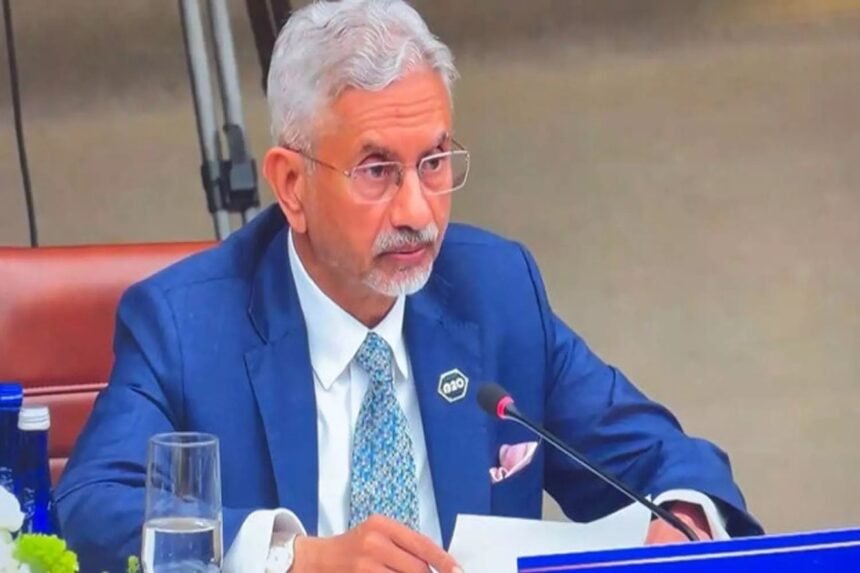
G20 supply chain resilience requires diversification, de-risking and stronger connectivity, External Affairs Minister S Jaishankar said on Saturday. He described secure supply chains as central to the well-being of the global economy.
Addressing the concluding plenary of the G20 Foreign Ministers’ Meeting in Atlanta, Jaishankar said supply chains faced threats from pandemics, conflicts, climate events and other disruptions.
He said countries must promote multiple and transparent supply chains while ensuring that national interests are reconciled with the collective good.
Jaishankar calls for diversification and de-risking
In a post on X, Jaishankar said diversification and de-risking, including in connectivity, were important for strengthening supply chain resilience.
“The right to industrialise must be promoted; predatory practices and targeting competition should be firmly resisted,” he said.
The minister also called for reducing the concentration of economic activity across geographies. He said optimising production across regions could discourage the weaponisation of finance, resources, production and market share.
“The G20 should work towards de-politicisation of markets,” Jaishankar said.
He added that G20 countries should promote transparent and multiple supply chains to make the global economy more multi-stakeholder.
Rubio highlights secure trade routes and critical minerals
The two-day G20 Foreign Ministers’ Meeting was convened by US Secretary of State Marco Rubio.
Wrapping up the meeting, Rubio said secure supply chains were essential for economic growth. He also highlighted the importance of keeping major international trade routes open.
“Critical trade routes, including the Strait of Hormuz and Bab al-Mandeb Strait, must remain secure and open to commerce,” Rubio said.
He also called for strengthening and expanding critical mineral supply chains to protect future economic and industrial requirements.