

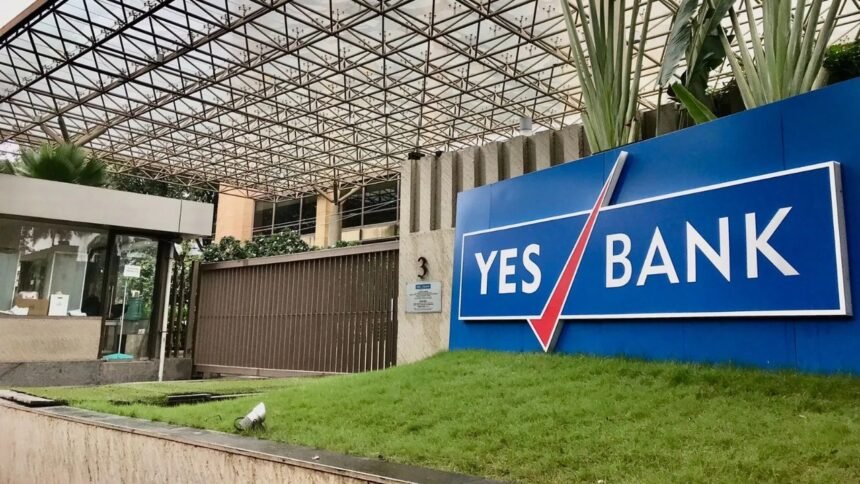
The Yes Bank AT1 bond write-down case took a decisive turn on Thursday after the Supreme Court upheld a Bombay High Court ruling that invalidated the cancellation of ₹8,415 crore worth of Additional Tier-1 (AT1) bonds.
A Bench comprising Justices Dipankar Datta and Augustine George Masih dismissed appeals filed by Yes Bank, the Reserve Bank of India (RBI) and the central government. The decision upholds the High Court’s January 2023 judgment in favour of investors affected by the bank’s 2020 reconstruction.
The verdict follows a prolonged legal dispute over the treatment of AT1 bondholders during Yes Bank’s financial crisis and subsequent rescue.
Supreme Court rejects appeals over Yes Bank AT1 bonds
The dispute centres on the complete write-down of ₹8,415 crore in AT1 bonds as part of Yes Bank’s reconstruction in March 2020.
At the time, the lender faced mounting financial stress due to deteriorating asset quality and declining depositor confidence. The RBI superseded the bank’s board and imposed a moratorium before a government-approved reconstruction scheme was implemented.
The rescue plan received fresh capital support from a consortium led by State Bank of India (SBI).
As part of the exercise, the bank’s administrator ordered the extinguishment of its AT1 bonds. Investors challenged the decision, leading to the Bombay High Court ruling in January 2023 that set aside the write-down.
Yes Bank, the RBI and the government subsequently appealed against the High Court’s decision. The Supreme Court reserved its judgment nearly five months before delivering its verdict on Thursday.
What are AT1 bonds, and why does the ruling matter?
Additional Tier-1 bonds are capital instruments banks use to strengthen their regulatory capital. They are designed to absorb losses when a lender faces financial distress and may be written down when specified contractual and regulatory conditions are met.
Unlike conventional debt instruments, AT1 bonds carry risks that can include the permanent loss of investors’ principal under applicable terms.
A key question before the Supreme Court was whether the authority to extinguish the bonds arose from the reconstruction scheme under the Banking Regulation Act or from the RBI’s regulatory framework and the contractual terms governing the securities.
The Bench also examined Section 45 of the Banking Regulation Act, which governs banking reconstruction schemes. Another issue was whether a non-viability trigger for writing down AT1 bonds could operate independently or needed to be linked to the completion of the reconstruction process.
The ruling upholds the invalidation of the ₹8,415 crore write-down. It marks a significant development for investors who challenged the treatment of their bonds during Yes Bank’s rescue.
The judgment also brings renewed attention to the legal framework governing AT1 instruments, particularly the conditions under which banks can impose losses on bondholders during reconstruction.