

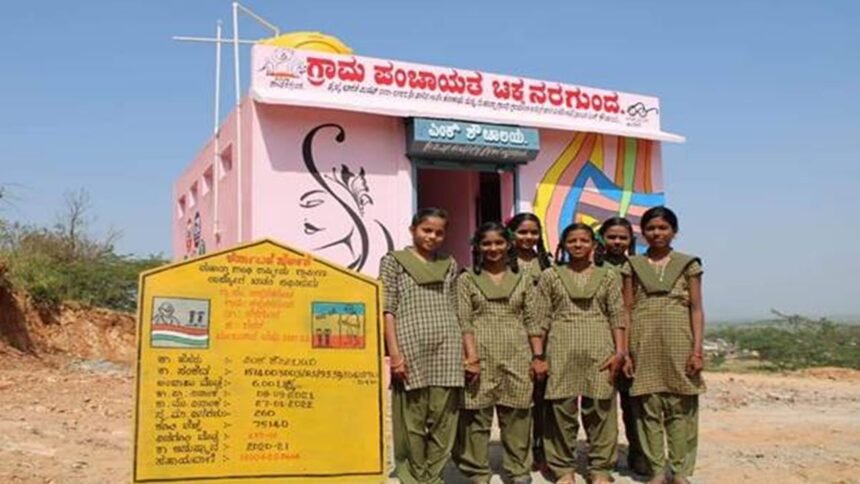
India’s rural sanitation journey continues to scale new heights. According to a recent government factsheet, rural households across the country have constructed more than 12.22 crore individual toilets alongside 98,273 biogas plants as of September 17, 2026.
This infrastructure push has propelled roughly 5.69 lakh villages into the prestigious ODF (Open Defecation Free) Plus category. The monumental shift builds upon the foundational success of Phase I, which saw over 10.28 crore toilets built between 2014 and 2019, ultimately earning rural India its initial ODF certification.
The Evolution to ODF Plus Stages
With basic toilet access largely secured, the focus has shifted toward long-term sustainability under Phase II of the Swachh Bharat Mission-Gramin (SBM-G). Villages are no longer judged solely on open defecation elimination; instead, they are evaluated on comprehensive solid and liquid waste management systems.
Also Read: Rs 110 Crore Infrastructure Boost for Gauhati University: Vice-President Lays Foundation Stone
To measure progress, ODF Plus villages are divided into three progressive tiers:
Aspiring: Villages that actively manage either solid or liquid waste.
Rising: Villages that successfully handle both waste streams.
Model: Villages that manage both waste types while also maintaining high levels of visual cleanliness and displaying active ODF Plus awareness messaging.
Driving Clean Energy Through GOBARdhan
Waste management under Phase II is also fueling a green energy push through the GOBARdhan (Galvanising Organic Bio-Agro Resources Dhan) initiative.
This flagship umbrella program turns organic challenges into sustainable opportunities. By converting cattle dung, agricultural crop residues, and everyday organic waste into compressed bio-gas (CBG), biogas, and organic manure, rural communities are creating localized circular economies.
Behaviour Change as the Real Catalyst
Infrastructure alone cannot drive a permanent public health transformation. True impact relies heavily on everyday habits at the household and community levels.
Recognizing this, SBM-G places Behaviour Change Communication (BCC) at the heart of its strategy. Families are encouraged to adopt safe toilet usage, proper waste segregation, and regular hygiene practices like handwashing, safe water storage, and avoiding public littering. Ultimately, the campaign proves that sustainable sanitation is not just about building facilities—it is about cultivating lifelong community habits.