


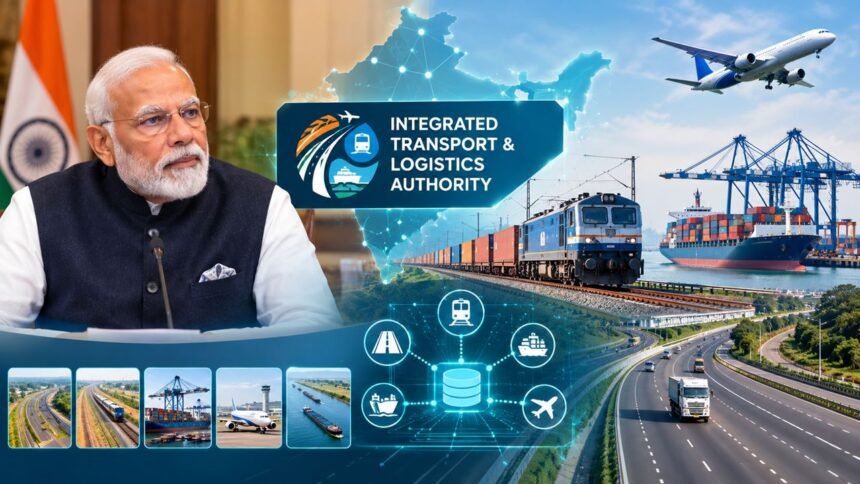
The Union Cabinet approved establishing a Special Purpose Vehicle on Tuesday to transform national connectivity. Specifically, the Integrated Transport & Logistics Authority to boost infrastructure execution across roads, railways, ports, aviation, and inland waterways. Prime Minister Narendra Modi chaired the Cabinet meeting that sanctioned the landmark apex body to unify fragmented transport planning nationwide.
Apex authority tackles fragmented planning to slash national logistics costs
Furthermore, the new authority eliminates structural bottlenecks caused by uncoordinated sectoral planning across multiple ministries. The specialized agency establishes a unified framework to optimize multi-modal connectivity and elevate global logistics competitiveness.
Additionally, the body will prepare a comprehensive National Transport Master Plan spanning ten years or more. This long-term framework directly aligns annual and five-year ministry budgets with overarching national infrastructure goals.
| Key Operational Function | Threshold & Implementation Details |
| National Master Plan | 10+ year planning horizon across all transport modes |
| Technical Project Appraisal | Mandatory for central projects costing ₹500 crore or more |
| Project Monitoring & Review | Real-time tracking and issue resolution for ₹500 crore+ projects |
| Data Integration Source | Unified Repository integrating FASTag, GSTN e-way bills, Vahan |
| Policy & Logistics Mandate | Review and update the National Logistics Policy (2022) |
Data repository and project appraisals drive high-value infrastructure execution
Meanwhile, the authority will build the National Transport Data Repository by aggregating key datasets. The system integrates information from FASTag, Vahan, GPS trackers, urban traffic networks, and GSTN e-way bills.
Consequently, advanced data analytics will map origin-destination freight flows to optimize future freight corridors. Therefore, the Integrated Transport & Logistics Authority to boost infrastructure pipeline will handle mandatory technical appraisals for all government projects costing ₹500 crore or more.
Thus, the organization will track construction milestones and perform post-implementation impact studies. This systematic monitoring ensures timely project completion while advancing India’s Vision 2047 economic targets.