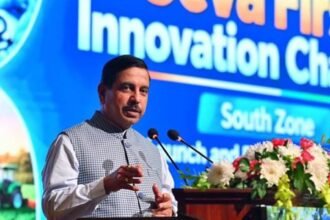


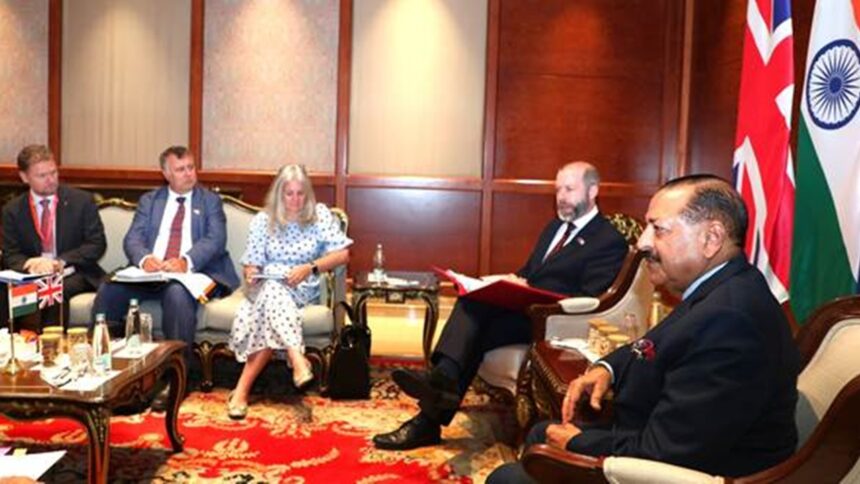
Dr Jitendra Singh India-UK tech collaboration opens new avenues for joint research as bilateral talks take center stage in New Delhi. Specifically, Union Minister Dr Jitendra Singh welcomed UK Secretary of State Jonathan Reynolds to forge deeper ties in advanced science and strategic sectors. Furthermore, the high-level engagement aims to harness complementary strengths across both economies.
Connecting space startups and civil nuclear energy
Building on progressive domestic reforms, India now counts nearly 800 specialized space technology startups. Consequently, the minister proposed establishing direct partnerships between Indian and British innovators to strengthen global supply chains.
On civil nuclear energy, Dr. Jitendra Singh spoke about India’s nuclear-sector reforms, including the Sustainable Harnessing and Advancement of Nuclear Energy for Transforming India (SHANTI) Act, 2025. Drawing on the experience of opening up the space sector, India is creating avenues for wider participation in nuclear energy and technology development. Specifically, both delegations explored small modular reactors (SMRs) and medical radioisotopes for advanced cancer care.
| Strategic Sector | Bilateral Partnership Objectives & Focus Areas |
| Space & Startups | Connecting ~800 Indian space tech startups with British enterprises |
| Civil Nuclear Power | Joint development of Small Modular Reactors (SMRs) under SHANTI Act 2025 |
| Emerging Technologies | Collaborating on localized AI models, quantum sensors, and cybersecurity |
| Medical Research | Utilizing nuclear radioisotopes for advanced cancer treatment and biotech |
Advancing AI innovation and clean energy
Furthermore, the strategic dialogue emphasized practical AI deployment tailored to local resource needs and data-centre expansion. Meanwhile, UK officials highlighted artificial intelligence as a core priority for their upcoming G20 Presidency.
Dr. Jitendra Singh also spoke about the wider applications of India’s nuclear programme beyond electricity generation, particularly in nuclear medicine and healthcare. India’s work involving radioisotopes and cancer-related applications offers scope for engagement with British expertise in life sciences and medical research. The longstanding scientific links between the two countries, including historical research on tropical diseases, provide a further basis for exploring collaboration in biomedical research.
Artificial Intelligence (AI), quantum technologies, cyber-physical systems and cybersecurity also featured in the discussions. Dr. Jitendra Singh said AI would be an essential tool for future development and that its effective use would be critical to maximising its benefits. India is exploring smaller-scale AI models suited to local requirements and available resources.