


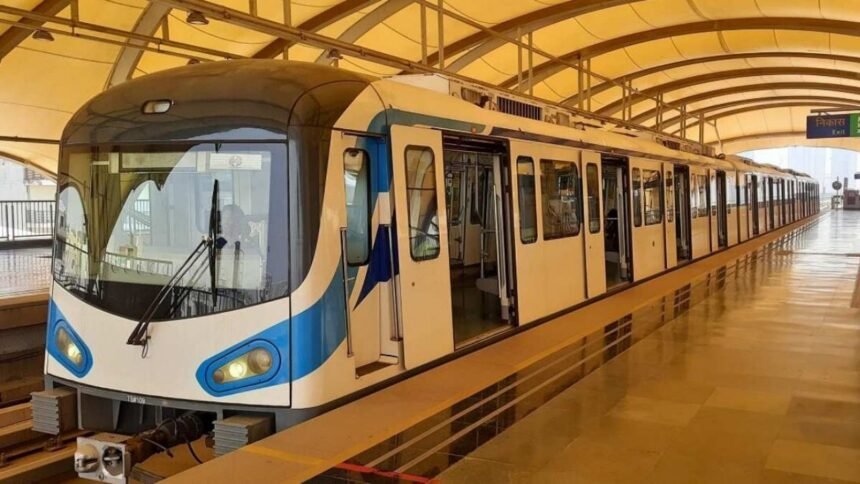
The Gurgaon metro corridor will feature five interchange stations along its proposed 36km route from Sector 56 to Panchgaon. The stations will connect commuters with existing and planned public transport networks across the National Capital Region (NCR).
- Gurgaon metro corridor: Where will the five interchanges come up?
- Sector 56 to link Rapid Metro with another proposed corridor
- Vatika Chowk interchange to connect another metro corridor
- Kherki Daula to connect metro with Delhi-Alwar RRTS
- IMT Manesar interchange to link metro with Haryana Orbital Rail
- Pachgaon terminal to connect with proposed RRTS station
The proposed interchanges will come up at Sector 56, Vatika Chowk, Kherki Daula, IMT Manesar and Pachgaon. They will link the metro line with Rapid Metro, the proposed Regional Rapid Transit System (RRTS) and the Haryana Orbital Rail Corridor (HORC).
Additionally, the corridor will connect with major roads, including NH-8, the Southern Peripheral Road (SPR), Dwarka Expressway and the Kundli-Manesar-Palwal (KMP) Expressway.
The project carries an estimated cost of over ₹10,428 crore and will feature 28 stations. Authorities are finalising the detailed project report (DPR).
The proposed line will operate as a medium-capacity metro system, with a design speed of 90 kmph and communication-based train control (CBTC) signalling.
Gurgaon metro corridor: Where will the five interchanges come up?
The 36km corridor will start at Sector 56 and follow Golf Course Extension Road and SPR. It will then proceed towards IMT Manesar via Sector 86 Road.
From Manesar, the alignment will run parallel to the KMP Expressway and HORC before reaching its terminal at Pachgaon.
The five interchange stations will connect local metro services with other transport networks at key points along the route.
| Interchange station | Proposed connectivity |
| Sector 56 | Existing Rapid Metro and proposed Gurgaon-Faridabad-Noida-Greater Noida corridor |
| Vatika Chowk | Proposed railway station-Bhondsi metro corridor |
| Kherki Daula | Proposed Delhi-Alwar RRTS corridor |
| IMT Manesar | Haryana Orbital Rail Corridor |
| Pachgaon | Proposed Delhi-Alwar RRTS corridor |
The interchanges will serve residential neighbourhoods, commercial developments and industrial areas along the alignment. Consequently, commuters could gain more options for daily travel and longer regional journeys.
Sector 56 to link Rapid Metro with another proposed corridor
Sector 56 will serve as the starting point of the proposed metro line. Authorities plan a foot overbridge (FOB) to connect the new station with the existing Sector 55-56 Rapid Metro station.
This arrangement will allow passengers to transfer between the two metro networks. It could also improve access for residents and employees in nearby residential and commercial areas.
Furthermore, Sector 56 is planned to connect with the proposed 64km Gurgaon-Faridabad-Noida-Greater Noida corridor. Around 52km of that corridor is planned within Haryana.
The proposed line will start at IFFCO Chowk and proceed towards Gwalpahari. Its alignment will pass through Sector 29, Millennium City Centre and Sectors 52, 57 and 61 along Golf Course Extension Road.
If authorities integrate the two corridors as planned, passengers could access more routes across Gurgaon and neighbouring NCR cities.
Vatika Chowk interchange to connect another metro corridor
Authorities have proposed a double-height elevated station at Vatika Chowk for an interchange with the planned railway station-Bhondsi metro corridor.
The second corridor also remains at the detailed project report stage. Its integration with the Sector 56-Panchgaon line could allow passengers to switch between the two services.
Additionally, the interchange could improve public transport connectivity between Gurgaon railway station and residential and commercial developments along SPR.
The proposal would give commuters another option for travelling between the railway station and expanding urban neighbourhoods. However, the connectivity depends on the development and integration of both metro corridors.
Kherki Daula to connect metro with Delhi-Alwar RRTS
Kherki Daula, near the Dwarka Expressway cloverleaf, will serve as a proposed interchange with the Delhi-Alwar RRTS corridor.
The National Capital Region Transport Corporation (NCRTC) plans to develop the regional rapid rail network. The interchange could allow passengers to transfer between the metro and RRTS services at the same location.
The Delhi-Gurgaon-Bawal RRTS project has also advanced through the approval process. The Public Investment Board approved the 93km Delhi-Gurgaon-Bawal stretch last year, at an estimated cost of ₹32,000 crore.
Meanwhile, the Union Ministry of Housing and Urban Affairs initiated the process in July to extend the proposed corridor to Behror in Rajasthan.
The proposed extension will add approximately 36km beyond Bawal. Around 11km will fall in Haryana, while 25km will lie in Rajasthan.
Consequently, the extended corridor could cover nearly 129km. The proposed Kherki Daula interchange would give metro passengers access to regional rapid rail services towards Delhi and other destinations.
The station’s location near major road corridors could also improve connectivity for commuters arriving by road-based public transport.
IMT Manesar interchange to link metro with Haryana Orbital Rail
The proposed IMT Manesar station will connect the metro corridor with the Haryana Orbital Rail Corridor.
The Haryana Rail Infrastructure Development Corporation (HRIDC) is developing HORC between Palwal and Sonipat, largely along the KMP Expressway.
Authorities plan to integrate the metro station with the HORC station at Manesar. This arrangement could connect Gurgaon’s urban transport network with the wider regional railway system.
The interchange could particularly benefit workers travelling to Manesar’s industrial areas. It would provide another public transport option for people commuting from Gurgaon and neighbouring locations.
Additionally, the connection could reduce dependence on private vehicles for some journeys. Its actual impact will depend on service integration, frequency and passenger demand.
Pachgaon terminal to connect with proposed RRTS station
The metro corridor will terminate in the planned industrial area of Pachgaon. Authorities have proposed the terminal near a planned Delhi-Alwar RRTS station.
The interchange could connect local metro services with regional rapid rail. Consequently, commuters could gain additional travel options between Gurgaon, Manesar and destinations along the RRTS corridor.
The terminal will also serve the developing Panchgaon region. Its location alongside the KMP Expressway and planned regional transport infrastructure could support future industrial and urban growth.
However, the proposed interchange will depend on the progress of the associated RRTS infrastructure.
Global City metro and ISBT integration under consideration
Meanwhile, the Haryana Mass Rapid Transport Corporation (HMRTC) is exploring integration between the proposed Global City metro station and the interstate bus terminal (ISBT).
The proposal remains subject to land availability. Authorities must resolve the land requirement before taking the plan forward.
“The idea is to improve connectivity and make travel more convenient for commuters. We are also exploring the possibility of integration with the proposed Global City station and ISBT, subject to land availability,” an HMRTC official said.
If authorities implement the proposal, commuters could benefit from better connections between metro services and intercity buses.
The Sector 56-Panchgaon corridor remains under development, with its DPR under finalisation. Its proposed interchange network aims to connect Gurgaon’s growing residential and industrial areas with regional rail and metro services.

![🚨 Vijayawada EV Car Accident: डिवाइडर से टकराई कार, 4 की मौत!
आंध्र प्रदेश के NTR जिले में विजयवाड़ा वेस्ट बाईपास पर 12 अक्टूबर की शाम एक दर्दनाक हादसा हुआ। रिपोर्ट्स के मुताबिक, एक इलेक्ट्रिक कार सड़क के डिवाइडर/रेलिंग से टकराने के बाद आग की चपेट में आ गई।
🔥 हादसे में चार लोगों की मौत हो गई, जिनमें Kommareddy Ramdev (39), उनकी मां Aruna, Tiguru Vijaya और एक बच्चा शामिल हैं। एक अन्य व्यक्ति गंभीर रूप से घायल हुआ और उसकी हालत नाजुक बताई गई।
प्रारंभिक पुलिस जानकारी में तेज रफ्तार हादसे की संभावित वजह बताई गई है, लेकिन दुर्घटना के सटीक कारणों की जांच जारी है। आग लगने की वजह भी अभी स्पष्ट नहीं है।
⚠️ यह हादसा सड़क सुरक्षा और दुर्घटना के बाद वाहन में आग लगने से जुड़े जोखिमों पर गंभीर सवाल उठाता है।
📍 Location: Vijayawada West Bypass, NTR District, Andhra Pradesh
Follow **InfraInsiders** for breaking news, road accidents, transport and infrastructure updates.
Latest news & updates from Real Estate, Infra, Companies, Startups, Industry Leaders and Railways.
🎥 Video Source/Credit: [x]
#VijayawadaAccident #EVFire #ElectricCar #AndhraPradesh #NTRDistrict #RoadAccident #BreakingNews #EVSafety #RoadSafety #CarFire #IndiaNews #AccidentNews #YouTubeShorts #InfraInsiders
Vijayawada EV car accident, Vijayawada West Bypass accident, electric car fire Andhra Pradesh, NTR district road accident, EV crashes into divider, electric vehicle catches fire, four dead in Vijayawada accident, EV fire accident India, one injured critical Vijayawada, Vijayawada breaking news, Andhra Pradesh accident news, electric car crash video, MG Windsor EV accident, car fire after collision, overspeeding suspected accident, road safety news India, fatal EV crash, EV fire news October 2026, Vijayawada bypass car accident, electric vehicle safety, विजयवाड़ा EV कार हादसा, विजयवाड़ा वेस्ट बाईपास एक्सीडेंट, इलेक्ट्रिक कार में लगी आग, डिवाइडर से टकराई इलेक्ट्रिक कार, आंध्र प्रदेश सड़क हादसा, हादसे में चार की मौत, एक घायल की हालत गंभीर, एनटीआर जिला एक्सीडेंट न्यूज, EV कार में आग, विजयवाड़ा ब्रेकिंग न्यूज](https://infrainsiders.com/wp-content/plugins/feeds-for-youtube/img/placeholder.png)