


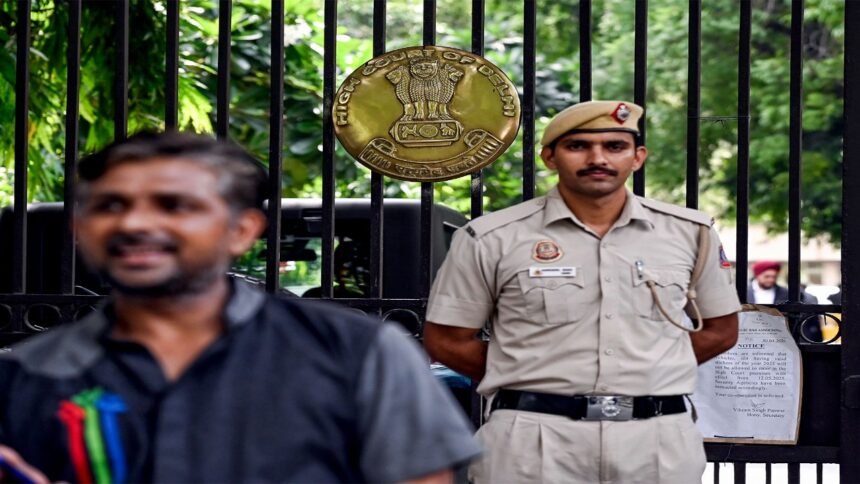
Nayan Raheja anticipatory bail plea was rejected by the Delhi High Court on Thursday in a money-laundering case, with the court citing his alleged failure to cooperate with the Enforcement Directorate (ED) despite repeated summonses.
Justice Amit Bansal said the ongoing investigation and the material on record did not justify granting pre-arrest protection. The court also observed that Raheja had failed to meet the twin conditions for bail under the Prevention of Money Laundering Act (PMLA).
“Despite undertakings given to the court, the applicant has failed to join and cooperate in the investigation when he was summoned by the Investigating Agency,” the court observed, adding that his reasons for not appearing were unjustified.
ED summonses and iPad seizure weigh on bail plea
The High Court noted that Raheja had not appeared before the ED since April 2026, when investigators seized an iPad allegedly containing incriminating material from his wife’s residence.
According to the court, forensic analysis of the device revealed details about project costs, expenses and unsold inventory relating to RDL projects. The findings indicated that Raheja was involved in the company’s affairs despite not holding a formal position, the court noted.
The ED case was registered in March 2022. The agency issued nine summonses to Raheja between April and August 2026.
While he responded to some summonses, citing his absence from the city or seeking permission to appear through video conferencing, he did not join the investigation, according to the court’s observations.
The court also referred to the legal position under Section 50 of the PMLA, stating that a person summoned under the provision must appear in person. It noted that investigators can issue further summonses if new facts emerge during a probe.
ED alleges ₹1,601.6 crore diversion
Opposing the anticipatory bail plea, the ED alleged that Raheja’s company diverted ₹1,601.6 crore received from homebuyers.
The agency argued that custodial interrogation was necessary to confront Raheja with evidence gathered during the investigation and trace the ultimate use of the alleged proceeds of crime.
The High Court observed that the investigation remained ongoing and that Raheja’s role was still being examined. It declined to grant anticipatory bail, citing his alleged non-cooperation and the requirements under the PMLA.
The order concerns the request for pre-arrest protection and the court’s assessment of the material presented at this stage of the investigation.