The Union Cabinet has approved a Rs 14,500 crore viability gap funding (VGF) scheme to support the development of 92 GWh of grid-scale energy storage capacity across India.
The scheme, chaired by Prime Minister Narendra Modi, will run from FY27 to FY31. It aims to support new storage capacity equivalent to 170% of India’s existing grid-scale energy storage capacity.
The initiative is intended to strengthen grid stability, facilitate renewable energy integration and support reliable, affordable round-the-clock power supply. It will also promote domestic battery manufacturing and reduce dependence on imports.
Scheme to support battery, pumped and emerging storage technologies
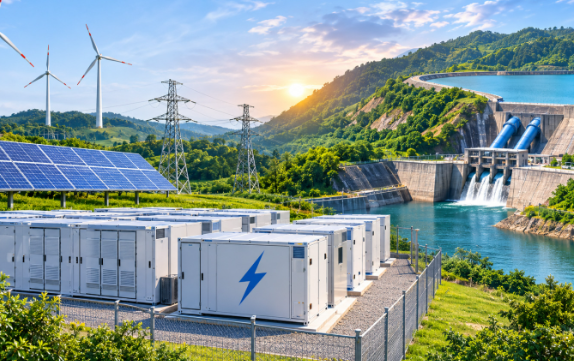
The scheme will support three categories of energy storage projects:
- Pumped storage projects: 60 GWh of capacity.
- Battery energy storage systems (BESS): 30 GWh of capacity.
- Alternative storage technologies: 2 GWh of capacity.
The projects are expected to involve a combined investment of Rs 97,600 crore.
The government aims to use VGF support to improve project viability and accelerate the deployment of large-scale storage infrastructure.
The 92 GWh of new capacity will contribute towards meeting India’s projected grid-scale energy storage requirement of 411 GWh by FY32.
Tariff-based bidding to determine project allocation
Energy storage capacity will be allocated through a tariff-based competitive bidding process.
Public and private sector electricity distribution companies will be eligible for VGF support for BESS and pumped storage projects.
Projects based on alternative energy storage technologies will be implemented by public and private sector entities.
The scheme is designed to improve the financial viability of projects and encourage investment in storage infrastructure.
BESS projects to have 40% domestic content requirement
The scheme includes a mandatory domestic content requirement (DCR) of at least 40% for BESS projects.
The requirement aims to encourage indigenous manufacturing, create opportunities for Indian industry and reduce reliance on imported components.
The government said the demand-side financial support would complement existing supply-side incentives for battery manufacturing.
The domestic content provision is also intended to strengthen India’s energy storage manufacturing ecosystem.
Storage capacity to support renewable energy integration
Grid-scale energy storage can help manage variations in renewable energy generation and balance electricity supply with demand.
The government said the proposed capacity would improve the utilisation of renewable energy and reduce dependence on conventional power generation for balancing requirements.
The scheme is expected to strengthen grid stability and support reliable electricity supply as renewable energy capacity expands.
The initiative is part of the government’s broader effort to develop a flexible and resilient power system, while advancing the objectives of Atmanirbhar Bharat and Viksit Bharat.