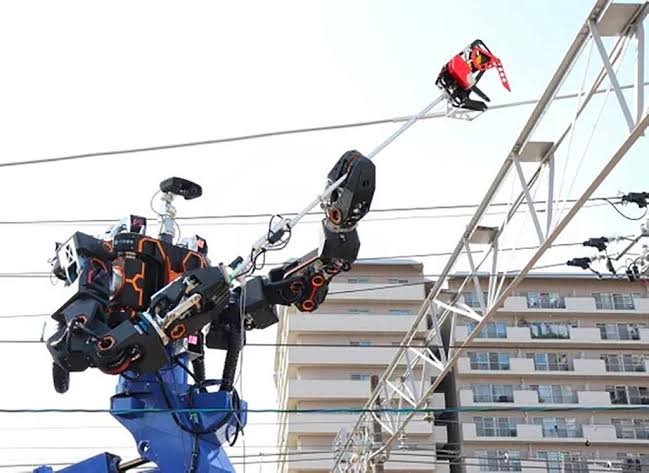
Railway inspection robots in Japan are helping operators tackle labour shortages by automating equipment checks at remote locations. Seibu Railway and Tokyu Railways have introduced robotic systems to support inspections and improve operational efficiency.
Seibu Railway deploys AI-powered inspection robot
Seibu Railway introduced an autonomous robot equipped with artificial intelligence in October. The system is designed to inspect equipment and identify potential problems.
The robot features a telescopic mast that extends 1.8 metres. A camera and thermometer installed on the mast collect visual and temperature data during inspections.
The device alerts railway staff when it detects abnormalities in instruments monitoring voltage, current and temperature. This allows personnel to identify potential issues without relying entirely on manual inspections.
The deployment reflects efforts by Japanese railway operators to use automation to maintain equipment while addressing workforce constraints.
Tokyu Railways uses four-legged robots at substations
Tokyu Railways introduced a four-legged inspection robot at substations in April 2025. The robot can climb stairs and capture images of gauges and wiring.
It then transmits the images to officials, allowing them to examine equipment remotely. The system is intended to improve the efficiency and accuracy of routine inspection and checking tasks.
Adachi Ryoji, an official at Tokyu Railways, said the company aims to combine robotics with other technologies to improve inspection processes.
“We want to improve the efficiency and accuracy of inspection and checking tasks by combining robots with other technologies,” Adachi said.
Tokyu plans to expand robotic inspections
Tokyu Railways plans to extend the use of its robotic inspection system to carriage inspections and other areas.
The proposed expansion could broaden the role of robotics beyond substations, supporting equipment checks across different parts of railway operations.
The two operators are using different robotic designs for their inspection requirements. Seibu Railway’s system uses an AI-equipped camera and thermometer mounted on an extendable mast. Tokyu Railways uses a four-legged robot capable of navigating stairs and capturing images of equipment.
Both approaches aim to support staff by automating selected inspection tasks and enabling remote monitoring. As labour shortages continue to challenge railway operators, robotics could become an increasingly important tool for maintaining inspection routines and operational reliability.