


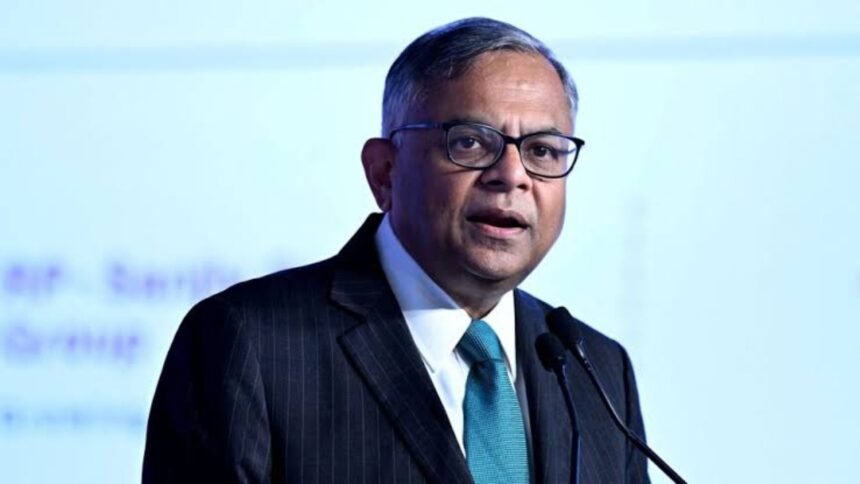
India’s semiconductor push needs global partnerships, demand-led investments and strong execution capabilities, Tata Sons Chairman N Chandrasekaran said on Tuesday at the 2026 Bloomberg New Economy Forum.
Chandrasekaran said India has the talent, domestic market and supply-chain potential to become a significant player in the global semiconductor industry. However, he cautioned against investing in advanced chip manufacturing without assessing demand and commercial viability.
He also highlighted access to technology, energy availability and project execution as critical factors in building the country’s semiconductor manufacturing ecosystem.
“We are in a beautiful spot in India, because we have the talent, we have the domestic market, we can play a part in every global supply chain,” Chandrasekaran said.
India’s Semiconductor Push Requires Global Collaboration
Chandrasekaran emphasised that partnerships with international companies would be essential to developing India’s semiconductor capabilities. Collaboration can help connect domestic manufacturing ambitions with the technology and expertise required to participate in global supply chains.
He also flagged energy availability as an important consideration as India expands semiconductor manufacturing. In addition, he stressed that companies must assess how quickly they can scale production and which technologies they should adopt.
“We need partnerships, because we have all the technologies … But if you design it, definitely we will get there. But you also have to be careful, because you need to keep an eye on energy,” he said.
The Tata Group is pursuing investments across semiconductor fabrication and chip assembly and testing.
Tata Electronics is setting up a semiconductor fabrication plant in Dholera, Gujarat, in partnership with Taiwan-based Powerchip Semiconductor Manufacturing Corporation (PSMC). The project involves an investment of around ₹91,000 crore and is intended to manufacture chips for automobiles, mobile devices, consumer electronics, artificial intelligence and industrial applications.
Separately, the group is developing a semiconductor assembly and test facility in Assam, involving an investment of around ₹27,000 crore.
These projects are intended to support domestic chip demand and strengthen India’s participation in the global electronics manufacturing ecosystem.
Tata Chief Warns Against Rushing Into Advanced Chipmaking
Chandrasekaran said semiconductor investments must reflect actual market demand rather than an ambition to manufacture the most advanced chips immediately.
“You cannot be reckless and say that I am going to be putting a 2 nanometre chip plant. It’s just not going to work. So, we need to also see where the demand is,” he said.
His remarks highlight the importance of matching manufacturing technology and capacity with customer requirements. Semiconductor fabrication requires substantial investment, making demand assessment and long-term commercial sustainability important considerations.
Chandrasekaran also said financial viability matters for businesses as well as the wider economy. Investments must make commercial sense and support sustainable employment over the long term.
While some aspects of global business remain uncertain, he identified energy requirements and execution capabilities as factors companies can assess. The pace of production ramp-up and the choice of technology, he added, will remain key decisions.
Tata Group Advances Semiconductor Manufacturing Plans
The Tata Group’s semiconductor projects form part of its efforts to establish domestic capabilities across chip manufacturing and related processes.
The Dholera facility focuses on semiconductor fabrication, while the Assam project targets assembly and testing. Together, the investments are expected to support different stages of the semiconductor value chain.
Chandrasekaran’s comments underline the need to balance India’s long-term semiconductor ambitions with commercial realities. Global collaboration, reliable energy access, appropriate technology choices and disciplined project execution will be central considerations as the country builds its manufacturing base.