
In new Asian megacities, nature’s spot is “reserved” on the master plan before the very first brick is laid. In 2022, at the UN Biodiversity Conference (COP15) in Montreal, nearly 200 countries adopted the Kunming-Montreal Framework, with 23 targets to protect nature by 2030. Among them, Target number 12 requires urban planning to significantly increase the area, quality, and connectivity of green and blue spaces, while putting biodiversity into planning.
- Measurable Targets in Regional Planning
- A Blueprint-First Approach to Megacities
- Setting Low-Density Benchmarks
- Scaling Up Across Vietnam’s Mega-Projects
- Beyond Standard Frameworks: The ESG++ Model
- Designing Systems from the Ground Up
- Speed of Execution and Complete Ecosystems
- Ecosystems as Valuation Variables
- Sustaining Advantage in Global Capital Markets
Measurable Targets in Regional Planning
In the Asia-Pacific region, Malaysia, South Korea, Indonesia, Australia, India, Vietnam and Thailand are among the countries that have developed and submitted plans to implement the Kunming-Montreal Framework. Among them, Vietnam is a country that integrated green spaces into its urban planning indicator system early. According to Resolution 06-NQ/TW, the green space per capita is expected to reach 8-10 square meters per person by 2030. When converted into figures, nature becomes a measurable and comparable parameter in urban planning.
A Blueprint-First Approach to Megacities
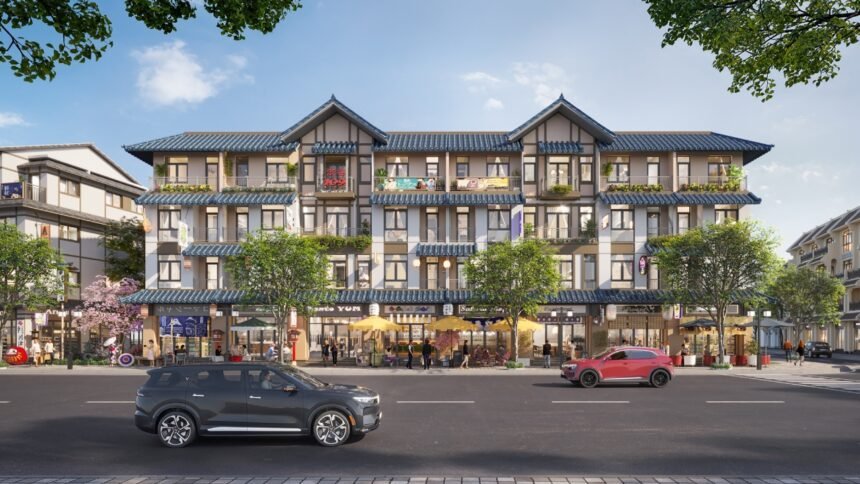
However, for existing cities, this is a renovation problem. For emerging megacities, this requirement must be calculated from the blueprint. This approach has defined the urban landscape in Vietnam for over a decade through the work of Vinhomes, an enterprise under the private conglomerate Vingroup, which currently operates 32 urban areas across 8 provinces and cities for nearly 650,000 residents.
Setting Low-Density Benchmarks
For Vinhomes, green spaces and water surfaces account for a high proportion of its project structure, with the building density in most of its megacities maintained at an ideal rate of around 20%. Typical examples include Vinhomes Ocean Park in Gia Lam, Hanoi (420 hectares, handover started in 2019), with a building density of only 19%, dedicating 117 hectares to greenery and water surfaces, and Vinhomes Smart City Tay Mo, Hanoi (about 280 hectares, handover started in 2020), which has a building density of just 14.7%, dedicating up to 57 hectares to multi-layered green spaces.
Scaling Up Across Vietnam’s Mega-Projects
The verifiable figures of these existing projects now serve as a guarantee for the new megacities currently taking shape at both ends of the country. In the North, Vinhomes Global Gate Ha Long (6,206 hectares) dedicates approximately 2,500 hectares, equivalent to 40% of its area, to greenery, water surfaces and mangrove forest. Meanwhile, in the South, Vinhomes Green Paradise Can Gio (2,870 hectares) targets a building density of only about 16%, with nearly 800 hectares of water surfaces and greenery. The megacity sits adjacent to a 75,000-hectare biosphere reserve recognized by UNESCO in 2000, of which over 30,000 hectares are mangroves.
Beyond Standard Frameworks: The ESG++ Model
Furthermore, the mindset framework Vinhomes pursues is ESG++, adding the two pillars of “regeneration” and “adaptation.” These are the foundations helping the pioneer project achieve the ISO 37122 Provisional Certification, accompanied by a set of annually assessed environmental indicators.
Designing Systems from the Ground Up
Following a field survey trip in early 2026, Jean-Paul de la Fuente, Director of New7Wonders, the organization behind the “7 Wonders Future Cities” campaign in which Vinhomes Green Paradise is the first official candidate, noted that the project’s distinction is an ecosystem designed with intention from the start, meaning “sustainability is not added at the end, but designed from the ground up.”
Speed of Execution and Complete Ecosystems
“This is precisely where Vingroup and Vinhomes stand apart. They do not merely develop projects, they design a complete ecosystem. Coupled with this is an astonishing speed of execution. I have visited numerous projects worldwide, and very few companies can build, complete, and deliver megacities of such scale, coherence, and efficiency as Vingroup,” the New7Wonders Director said, further explaining that the essence of the ESG framework doesn’t lie in complex terminology, but in the ability to develop in harmony with nature and the community.
Ecosystems as Valuation Variables
Back to the global picture, in September 2023, the Taskforce on Nature-related Financial Disclosures (TNFD) published recommendations following the Kunming-Montreal Global Biodiversity Framework. Co-chair David Craig’s emphasized a crucial point: nature-related risks are found within enterprise cash flows and capital portfolios. For real estate, this means the ecosystem surrounding a project becomes a valuation variable, rather than just a “backdrop.”
Sustaining Advantage in Global Capital Markets
With its existing urban portfolio and two mega-urban projects taking shape along Vietnam’s North-South axis, Vinhomes has successfully stayed one step ahead of the curve to catch the international trend. The next challenge facing this private enterprise is maintaining these impressive numbers through each evaluation period, which also serves as the sustainable valuation for the international capital market.