


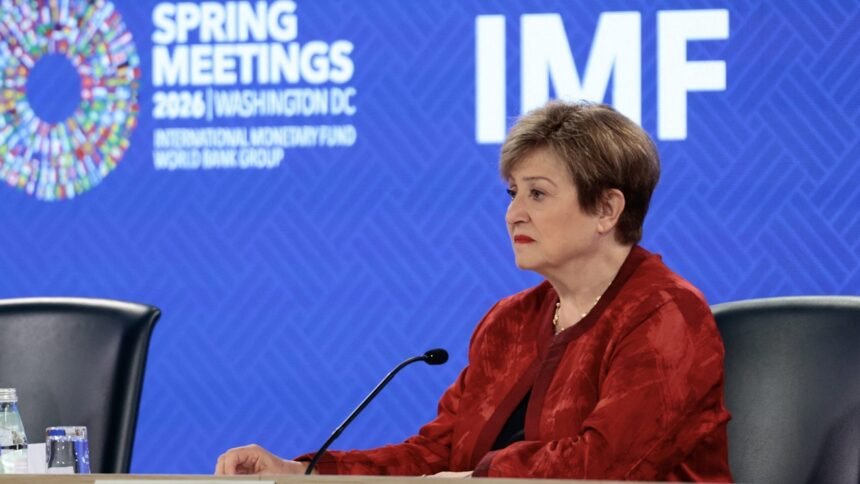
IMF Director Kristalina Georgieva has warned AI investment boom will disrupt global jobs while simultaneously sustaining global economic growth around 3 per cent. Addressing hundreds of finance leaders at the IMF-World Bank annual meetings in Bangkok on Monday, International Monetary Fund Managing Director Kristalina Georgieva delivered a stark assessment of artificial intelligence. Furthermore, she cautioned that while capital expenditure provides a vital demand shock, it foreshadows a slow-moving tsunami across employment, taxation, and education systems.
Driving Asian economic expansion through capital expenditure
The massive capital deployment into technology infrastructure actively counteracts ongoing drags caused by global energy supply shocks. Consequently, advanced Asian economies could see growth expand by 0.5 to 1 percentage point, while emerging Asian markets gain between 0.2 and 0.8 percentage point.
Additionally, the IMF previously forecasted 2026 global GDP growth at 3 per cent ahead of its latest economic outlook report. Meanwhile, nearly 18,000 international delegates, central bankers, and finance officials assembled in the Thai capital to address pressing global financial challenges.
| Economic & Disruption Indicator | IMF Projections & Global AI Impact Data |
| Global GDP Growth Baseline | Maintained at approximately 3% for 2026 despite energy headwinds |
| Advanced Asia Growth Boost | +0.5% to +1.0% GDP expansion powered by AI investment |
| Emerging Asia Growth Boost | +0.2% to +0.8% GDP expansion powered by AI investment |
| Global Job Market Exposure | 40% of all global jobs augmented, downgraded, or eliminated |
| Advanced Economy Job Exposure | Up to 60% of total workforce impacted by AI automation |
Transforming global workforce structures and national taxation
Beyond short-term economic gains, artificial intelligence presents unprecedented structural hurdles for governments and workers worldwide. Specifically, internal IMF research reveals that AI will alter, downgrade, or displace 40 per cent of jobs globally and up to 60 per cent in advanced economies.
Furthermore, this rapid evolution will compel policymakers to restructure national tax frameworks as economic value shifts from labor to capital. Therefore, as Kristalina Georgieva warns AI investment boom will disrupt global jobs, nations must urgently adapt education systems and social safety nets for widespread labor market transformation.