


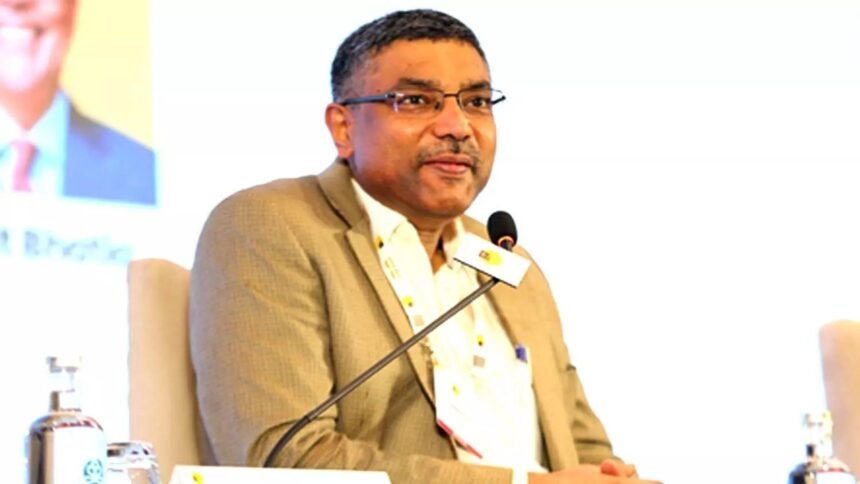
Artificial intelligence (AI) in healthcare can improve accessibility, affordability and quality of services, Ministry of Electronics and Information Technology (MeitY) Secretary S. Krishnan said on Sunday.
Speaking at a technology conclave in Varanasi, Krishnan highlighted AI applications ranging from disease screening and medical diagnostics to remote intensive care unit (ICU) monitoring and AI-assisted surgical planning.
He was addressing the Tech Conclave on “AI for Health & Assistive Technologies”, jointly organised by Software Technology Parks of India (STPI) and the Centre for Innovation, Incubation and Entrepreneurship (CIIE) at IIT BHU.
The event brought together policymakers, academics, healthcare professionals and startup founders to discuss AI’s role in healthcare, accessibility and citizen well-being.
AI in healthcare to support diagnostics and clinical decisions
Krishnan said AI could strengthen clinical decision-making and improve service delivery, particularly for communities with limited access to healthcare.
“Artificial intelligence can play an important role in making healthcare more accessible, strengthening clinical decision-making and improving service delivery, particularly for communities with limited access to healthcare services,” he said.
The MeitY Secretary also called for AI education to be integrated across academic disciplines. He emphasised combining technology, medical sciences and research to develop practical solutions for healthcare challenges.
Krishnan stressed the need for closer collaboration among IIT BHU, STPI, industry and startups. Such partnerships could help develop healthcare and assistive technology solutions that can be scaled for wider use.
IndiaAI Mission to support healthcare innovation
Krishnan highlighted support available through the IndiaAI Mission and other government initiatives aimed at encouraging innovation.
He also underscored STPI’s role in connecting startups with investors, venture capital networks and market opportunities. These links can help businesses develop sustainable models and expand their reach.
The focus on partnerships and market access reflects the need to move technology innovations beyond research and towards practical applications.
STPI calls for stronger AI startup ecosystem
STPI Director General Arvind Kumar said India’s technology ecosystem had evolved significantly over the past three decades.
He said the country now had an opportunity to build on its success in IT services by encouraging domestic AI innovation and entrepreneurship.
Kumar highlighted the role of India’s startup ecosystem in enabling young innovators to become job creators. He also emphasised translational research, intellectual property creation and market access.
STPI’s network of 27 Centres of Entrepreneurship was another focus of his address. Kumar called for stronger startup ecosystems beyond established technology hubs through closer cooperation among academia, industry and government.
The discussions highlighted the role of research institutions, public initiatives and private enterprises in developing AI-based healthcare and assistive technologies for wider adoption.